Fujifilm XF 16mm f1.4 WR review. A street photography classic.

Everybody knows the classic street photography focal length is 28mm, and for good reason. It’s wide enough to capture everything in a scene, but not so wide as to cause much distortion. You don’t hear many people raving about about 24mm though, with the notable exception of Alan Schaller, so why is this?
For the past few years I’ve largely shot street at 35mm, but I took a trip to New York City recently and I wanted a wider lens to fill the frame with all that NYC magic. I have an 18-55mm f2.8 ASPC zoom (18mm on an ASPC sensor is a 27mm full-frame equivalent) which gives me roughtly 28mm at the wide end, but I wanted a prime. A prime forces me to use that focal length, plus they typically have a wider maximum aperture which is arguably better for night shooting. They also look cooler, don’t deny it, and I want to look cool on the streets of NYC!
I looked into the 28mm full-frame equivalent Fuji lenses and I was a little disappointed. The “best” lens is the XF18mm F1.4 R WR which is meant to be pin-sharp, but it costs nearly £800 in the UK. It’s also a bit of a chunker, weighing in at 370g. There is a much smaller option with the pancake XF18mm F2 R, but this lacks weather resistance and the autofocus hunt a lot. I didn’t want to shell out £800 just yet, and I’ve actually owned the XF18mm before and I wasn’t a fan, so I wasn’t sure what to do.
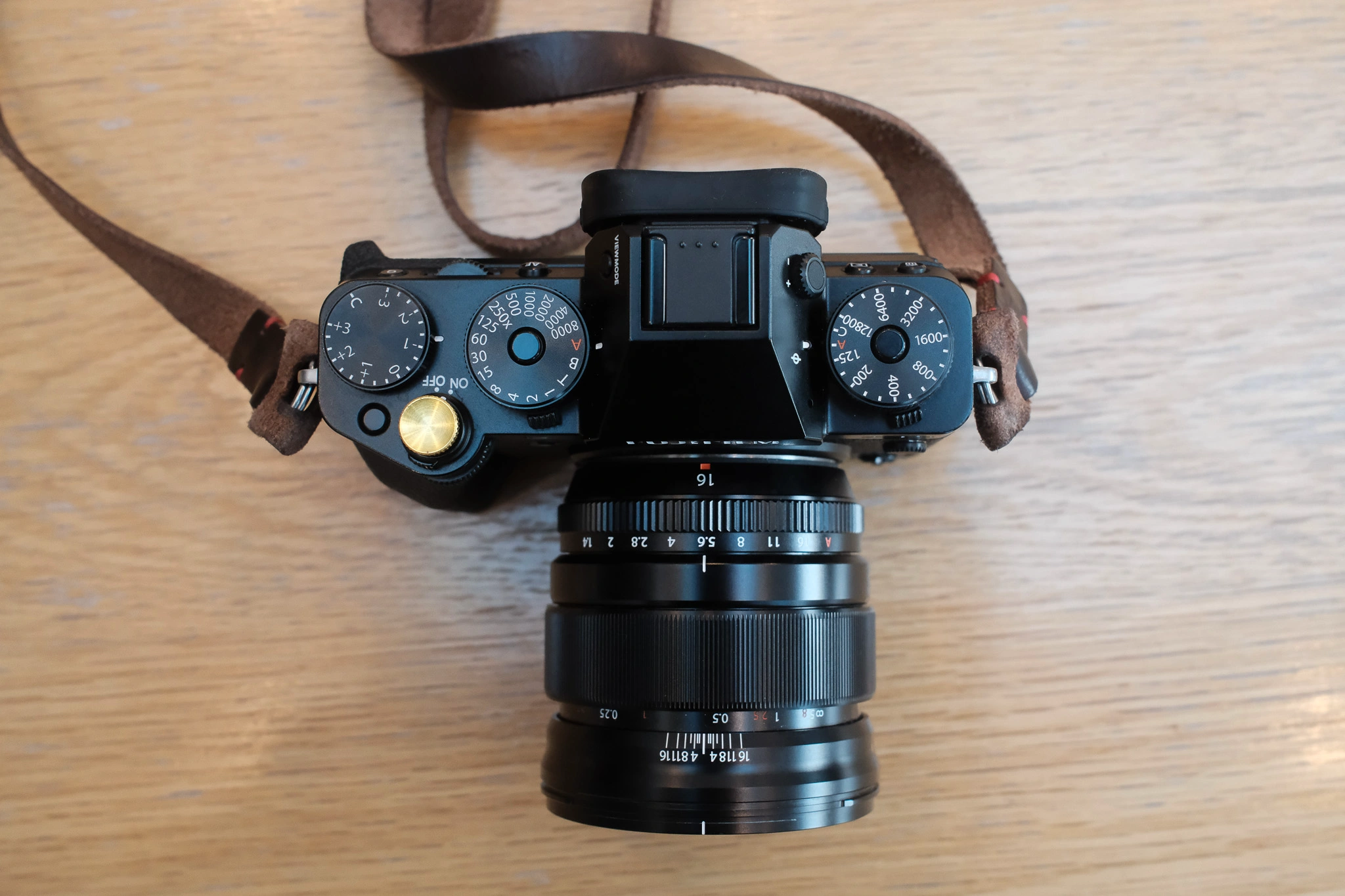
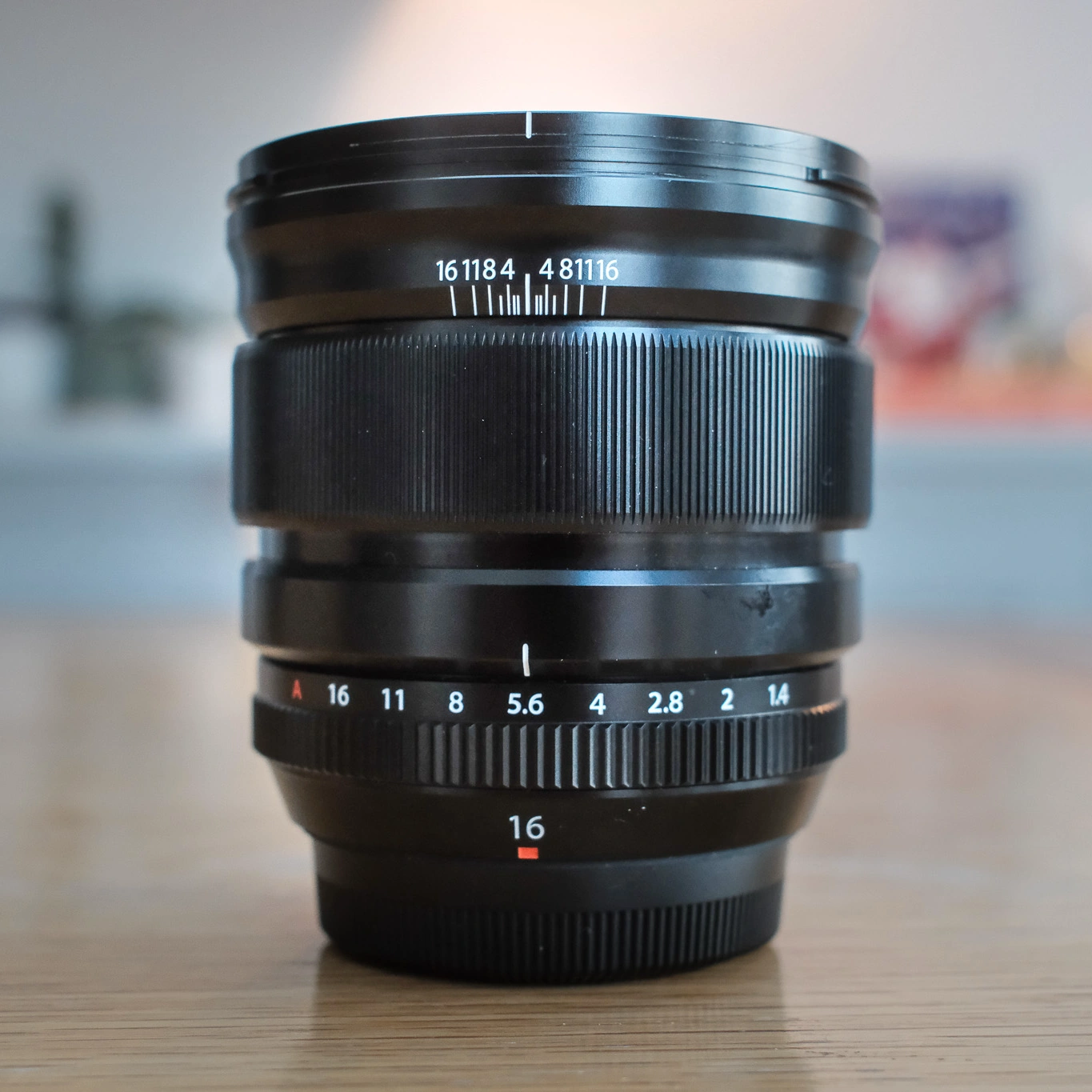
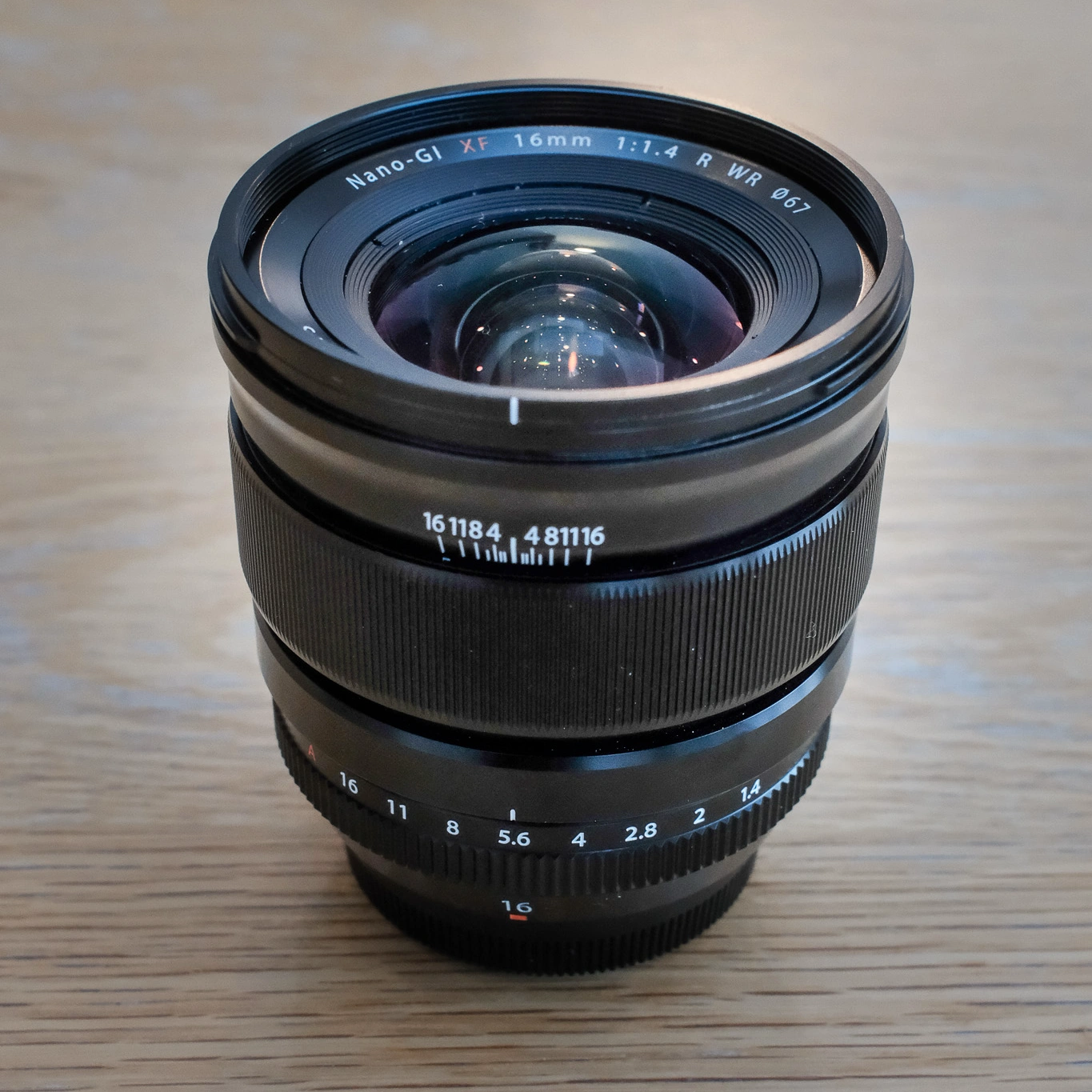
My disappointment led me to discover the XF16mm F1.4mm R WR. This is a high-quality, weather resistant prime which has an effective focal length of 24mm – only slightly wider than the 18mm Fujis. I was already intrigued and then I discovered it had a manual focus clutch complete with zone focusing guides (unique on a Fujifilm lens) and it turns out I could buy one in mint condition on eBay for £285! It’s definitely a chunker too (375g) but there’s always a compromise isn’t there? I bought it instantly!
Since then it has been glued to my camera and has quickly become my favourite Fujifilm lens. In this blog post I’ll try and convince you it’s worthy of your attention.
“24mm is too wide”
The main argument against 24mm is that it’s too wide, and it can distort the image. Having used this lens I don’t think it’s distorting any more than a 28mm, at least to my eye. Here are some portraits. What do you think?


Another common argument is that 28mm is hard enough, so 24mm is simply too hard for street. I totally get this because I’m still getting to grips with these wide focal lengths myself, but it’s only too wide if you’re too far away. Get closer!
If you end up with a bit too much in the scene compared to a 28mm (I think this is unlikely) then you can just crop it a bit. All modern sensors of the past 5 years have more than enough megapixels, so a small crop makes a negligible difference. If you think about, perhaps those few millimetres of width and the ability to crop make a 24mm more flexible than a 28mm?
It’s worth pointing out that one of the world’s most popular cameras has a 24mm equivalent main lens – the iPhone 15/16/17 Pro range! If you can take good photos on an iPhone main lens, you can take good photos on this 24mm lens.
Build quality, size and weight
I mentioned this lens is chunky but it’s solid muscle. It’s extremely well made and contains a lot of glass to get down to F1.4, but it’s not overly heavy like Fujifilm’s original 16-55mm F2.8 zoom which weighs in at a whopping 655g.
It feels pretty good on my X-T5 and I’m happy carrying it around all day, even hung around my neck. It’s not top heavy, it’s just about right in many ways. It would be perfect on an X-H body, but probably a bit front-heavy on an X-S or and X-Pro – but still doable. I’ve never owned an X-Pro so I can’t say definitively. I would think it’s a little too large for an X-T50 or X-E though.
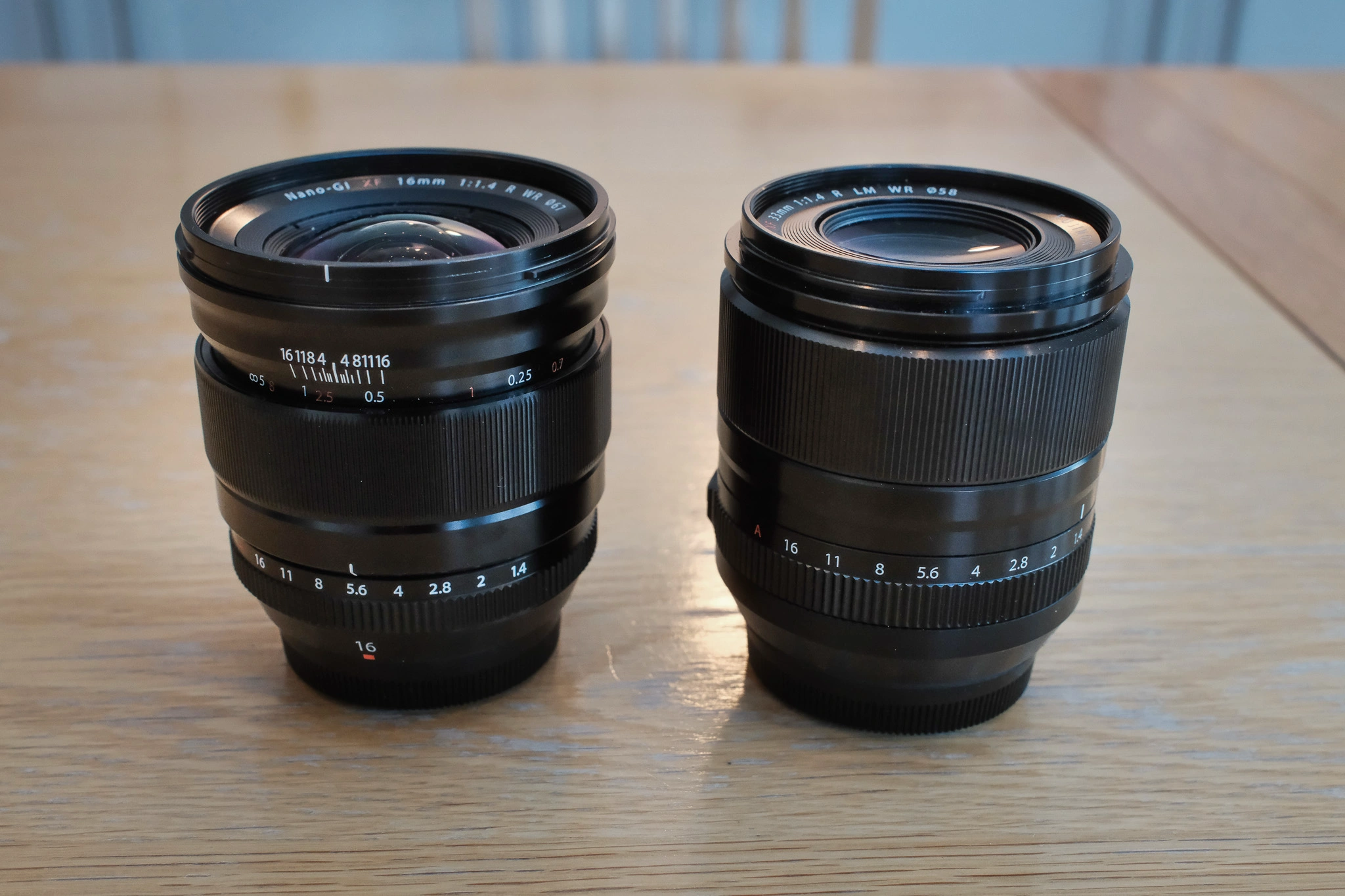
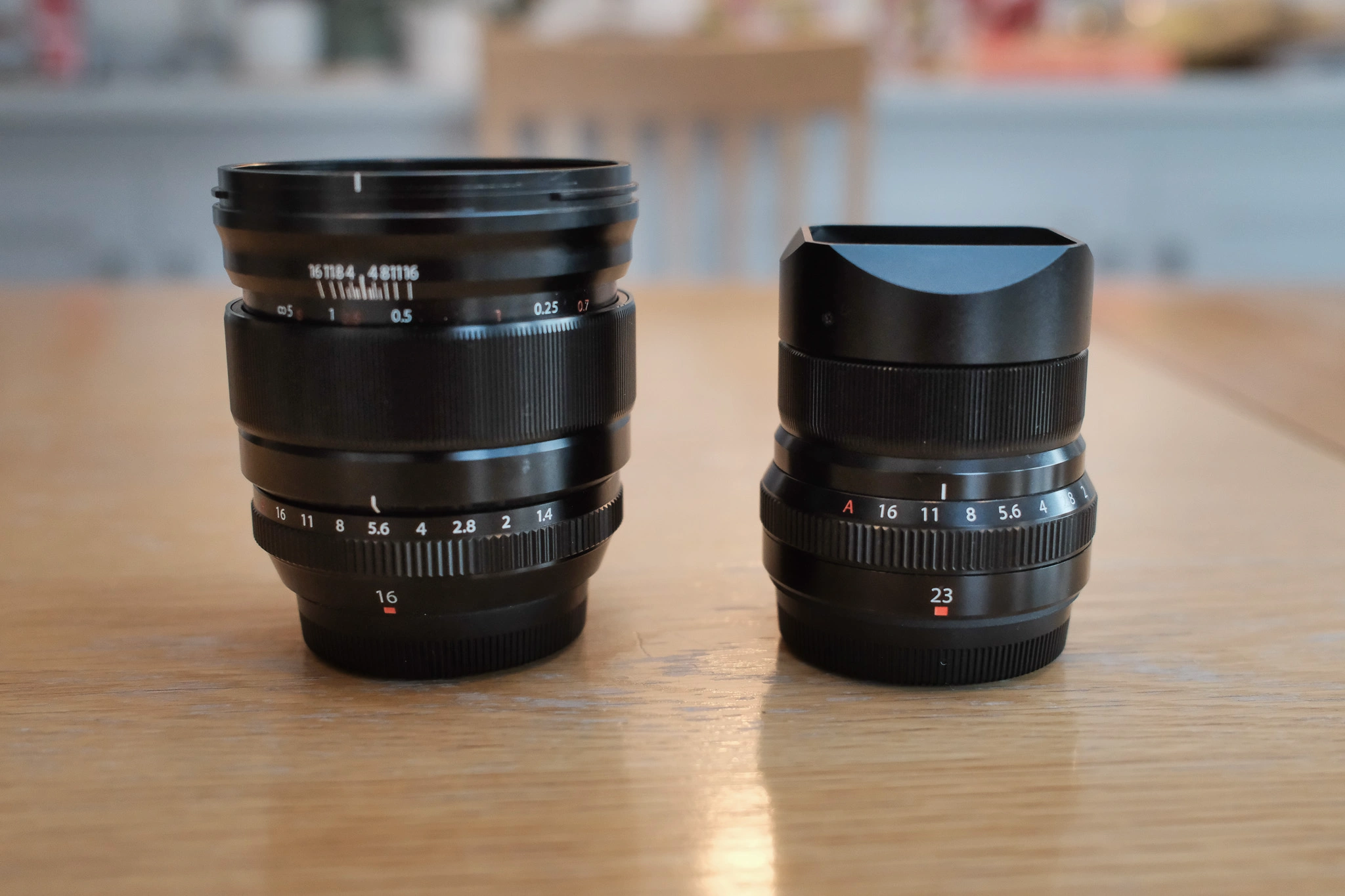
Some would say a lens like this is too large for street. Sure, next to a Leica M or a Fujifilm X-100VI it’s pretty big, but it’s not that different from the latest crop of Fujifilm linear motor lenses. It’s certainly fine when compared to a Sony or Canon – and these brands are perfectly fine for street! Perhaps this is just an issue some purists have made up?
To me the lens feels well balanced. It’s comparable to the modern LM options, just a bit broader as you can see in these side-by-side photos.
How does it perform for street photography?
The lens performs admirably on the street. The auto focusing speed is pretty good, perhaps a little slower than with the new generation of lenses but I find all the Fuji lenses (even the OG 35mm F1.4) perform acceptably on the X-T5 with its X-Trans V processor.
If you’re shooting at F8+ at 24mm, then pretty much the entire scene is going to be in focus such is the depth of field on these wide lenses. That said, if you’re a hip shooter, you may well want to use zone focusing to maximise your chance of nailing focus in a shot. For manual focusing, the 16mm F1.4 has a trick up it’s sleeve in the form of a manual focus clutch, as well as zone focusing guides.
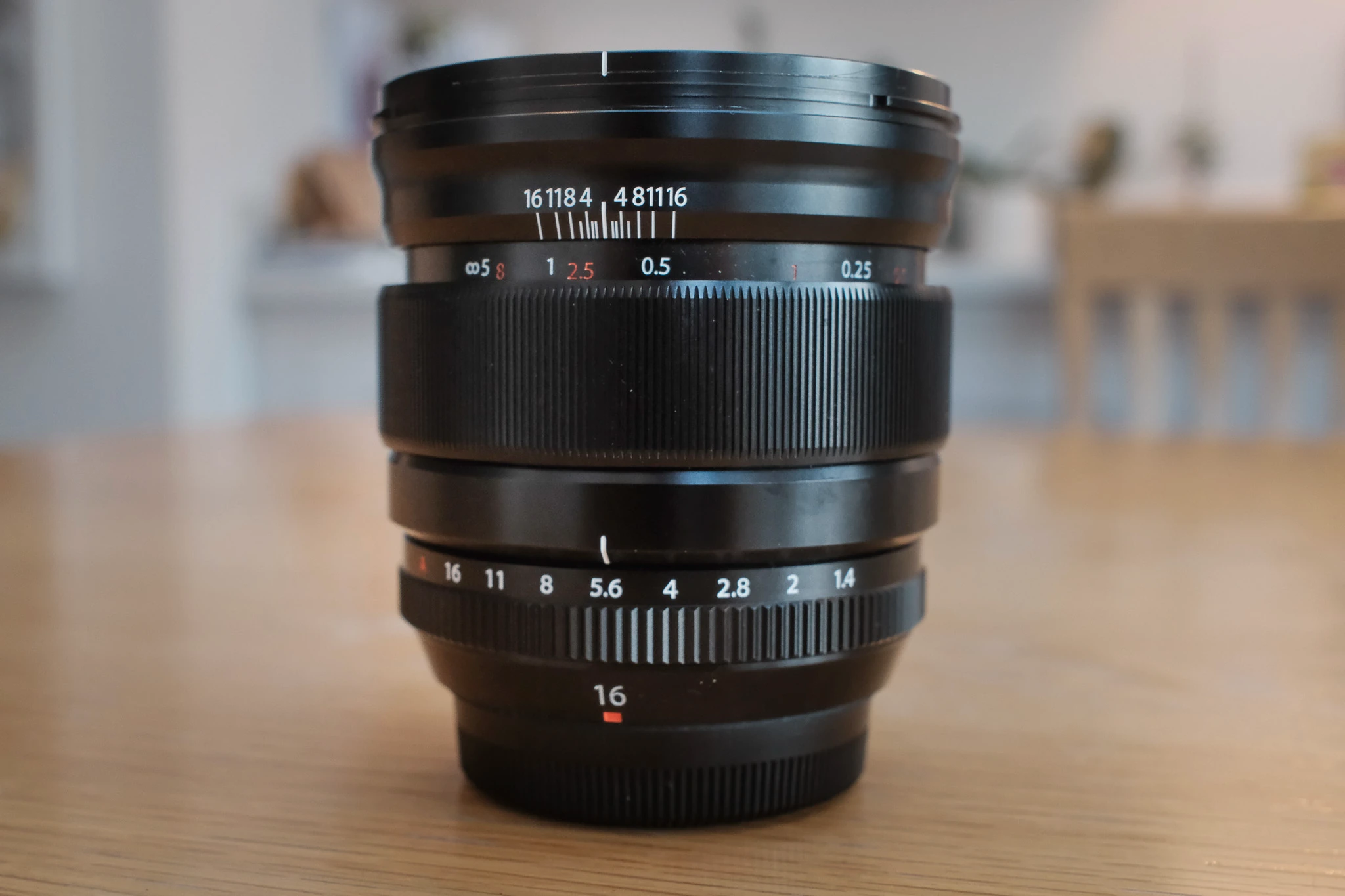
The clutch allows you to instantly switch between your current auto focus mode (e.g. single shot or continuous) and manual focus simply by pulling back the focusing ring on the lens itself. Doing so reveals zone focusing guides too, so you can – in theory – set your focus distance just by looking at the guide. I find the clutch to be a fantastic addition and it’s a surprise this isn’t on many other Fuji lenses. Switching between auto and manual on my X-T5 isn’t hard – there’s a switch on the front of the body – but it is fiddly. I have to physically look at the switch to remember which order the focus modes are in, but with the clutch it’s a simple case of pulling back on the focus ring. Wonderful!
While there is a zone focusing scale on the lens, it’s a far cry from the intricate one found on older film cameras or modern Leica M-series lenses. I have no idea why Fujifilm did this – it must be something to do with the physics of the lens – but the scale is waaaay too compact. It’s fine if you’re focusing up to 1m, but the scale from 1m to 5m is only around 5 degrees, so it’s almost impossible to set it precisely to 2 or 3m. It’s non-linear! You sort of get the hang of it over time, and Fuji get points for trying, but I don’t find it practical enough really.
The lens is also weather resistant which is extremely desirable for street, especially when caught in a biblical downpour like I was on a recent visit to New York! My camera and lens got soaked but it performed flawlessly.
Is the image quality good?
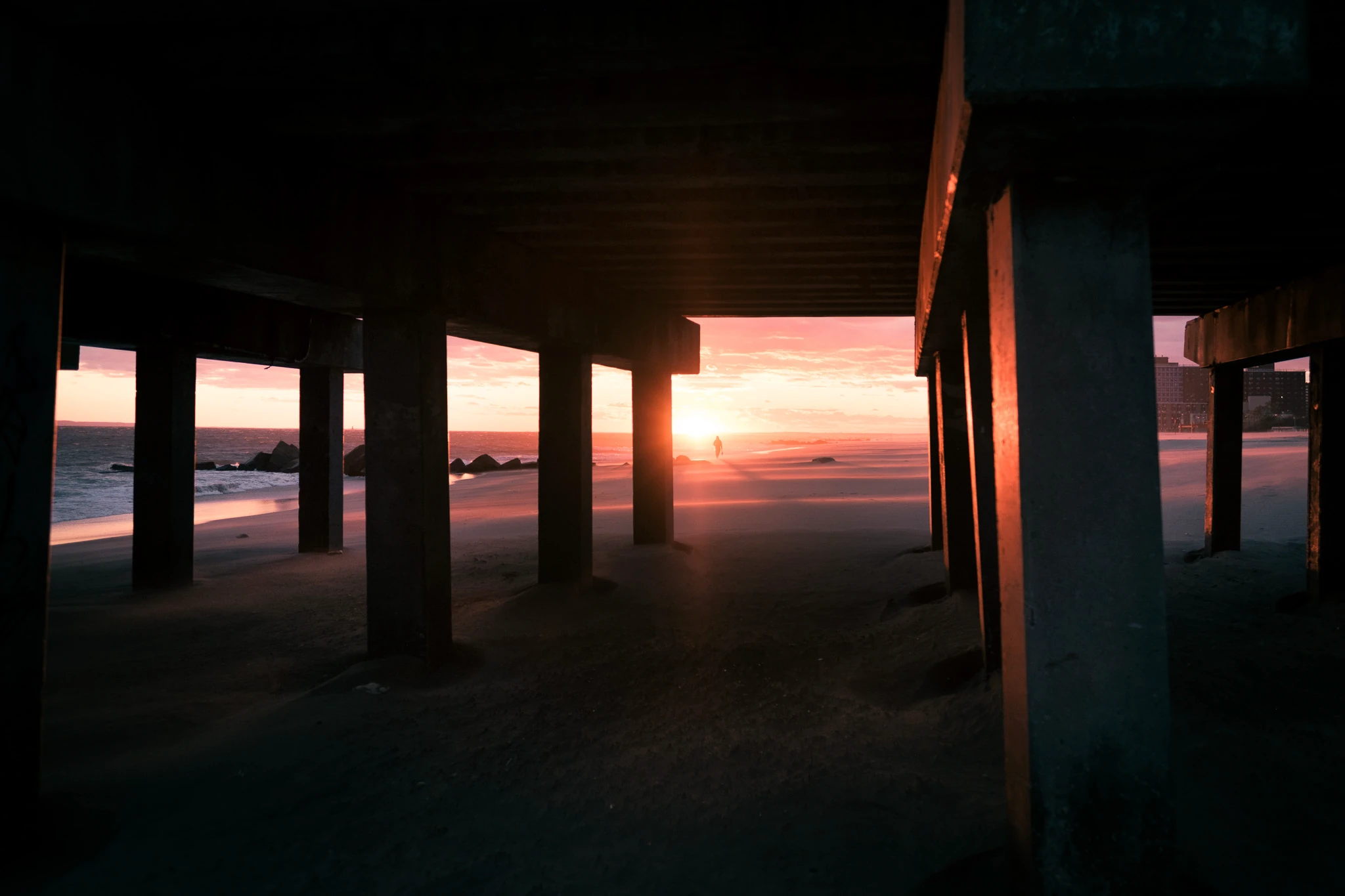
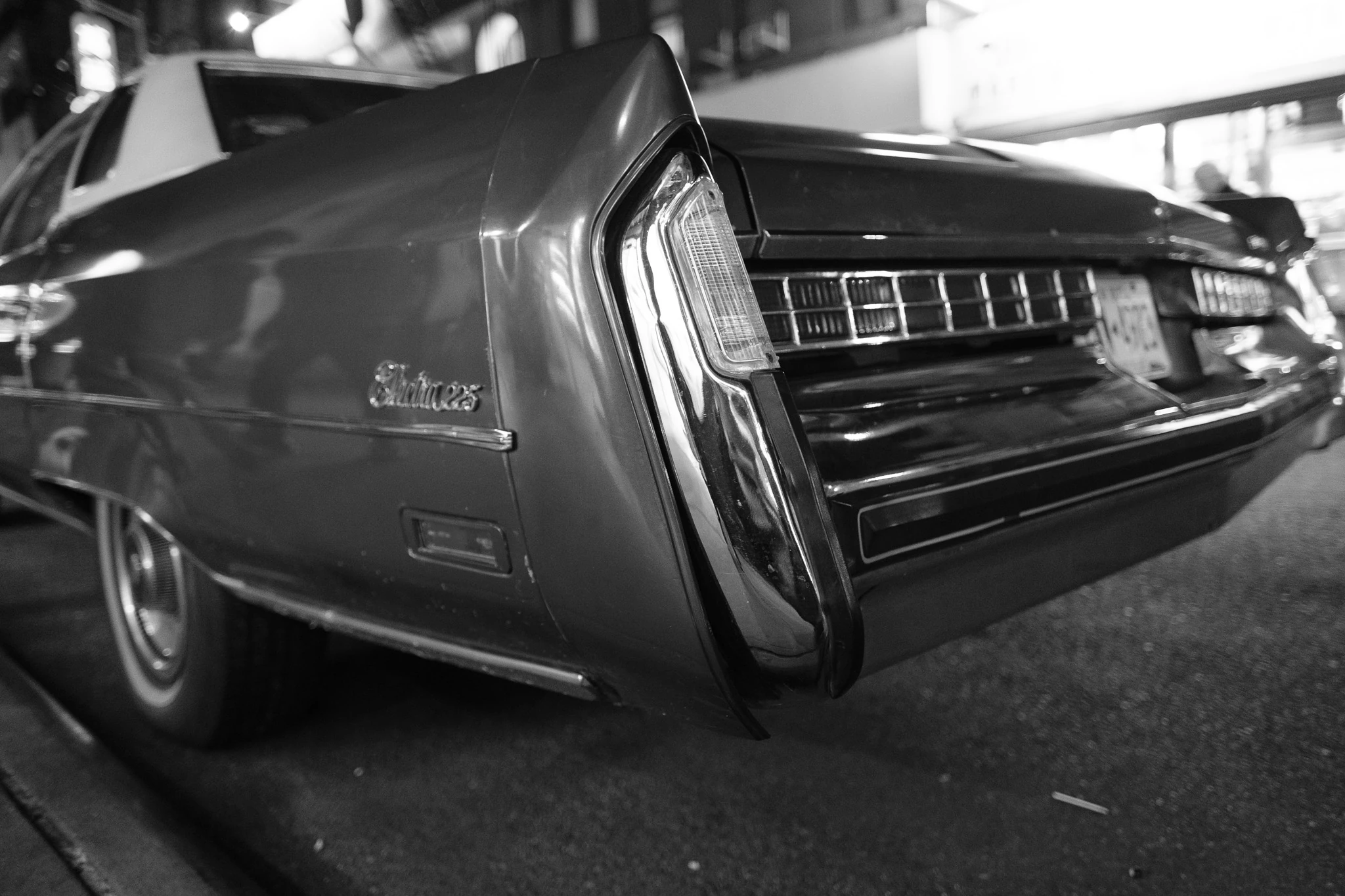
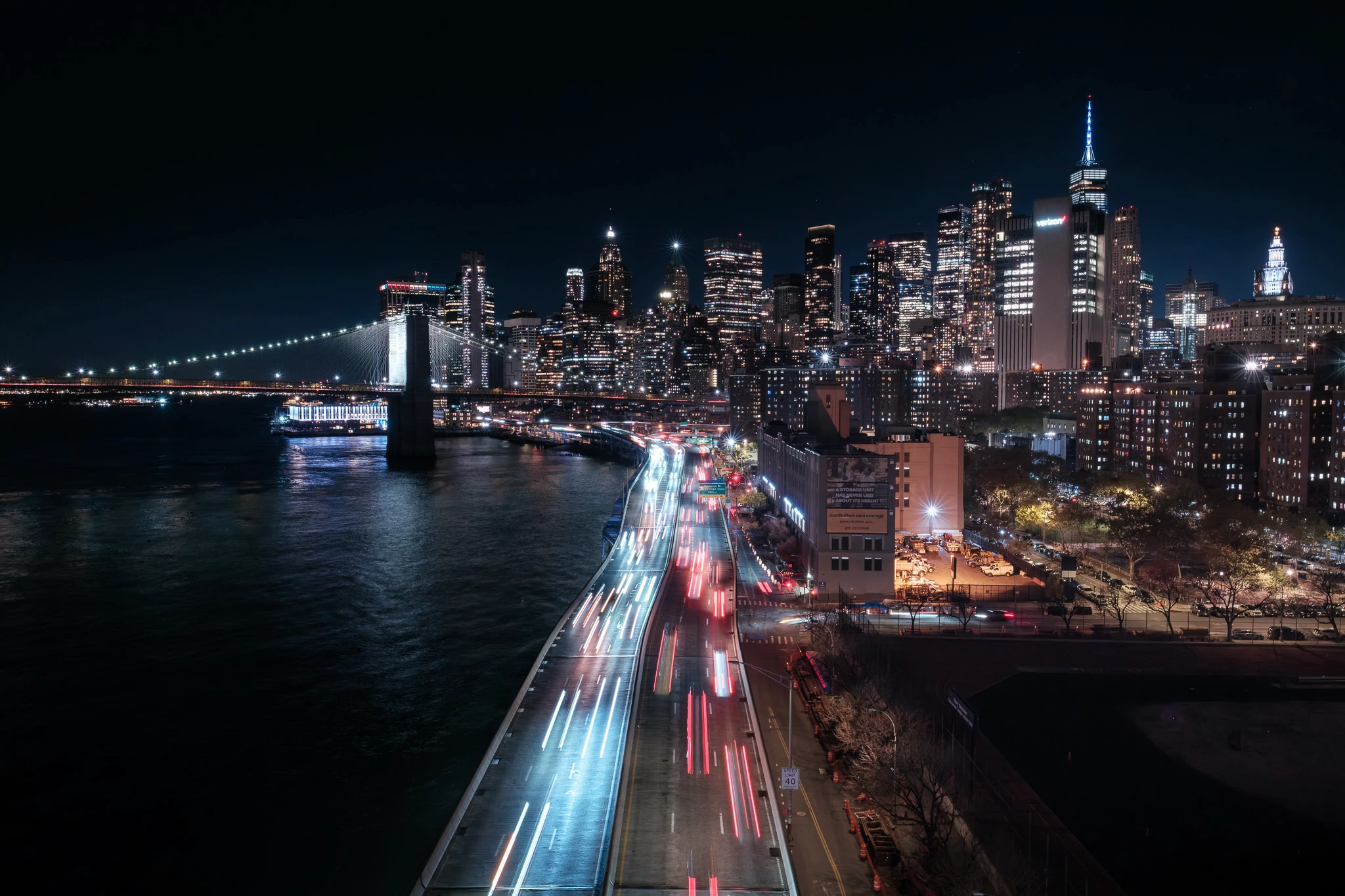
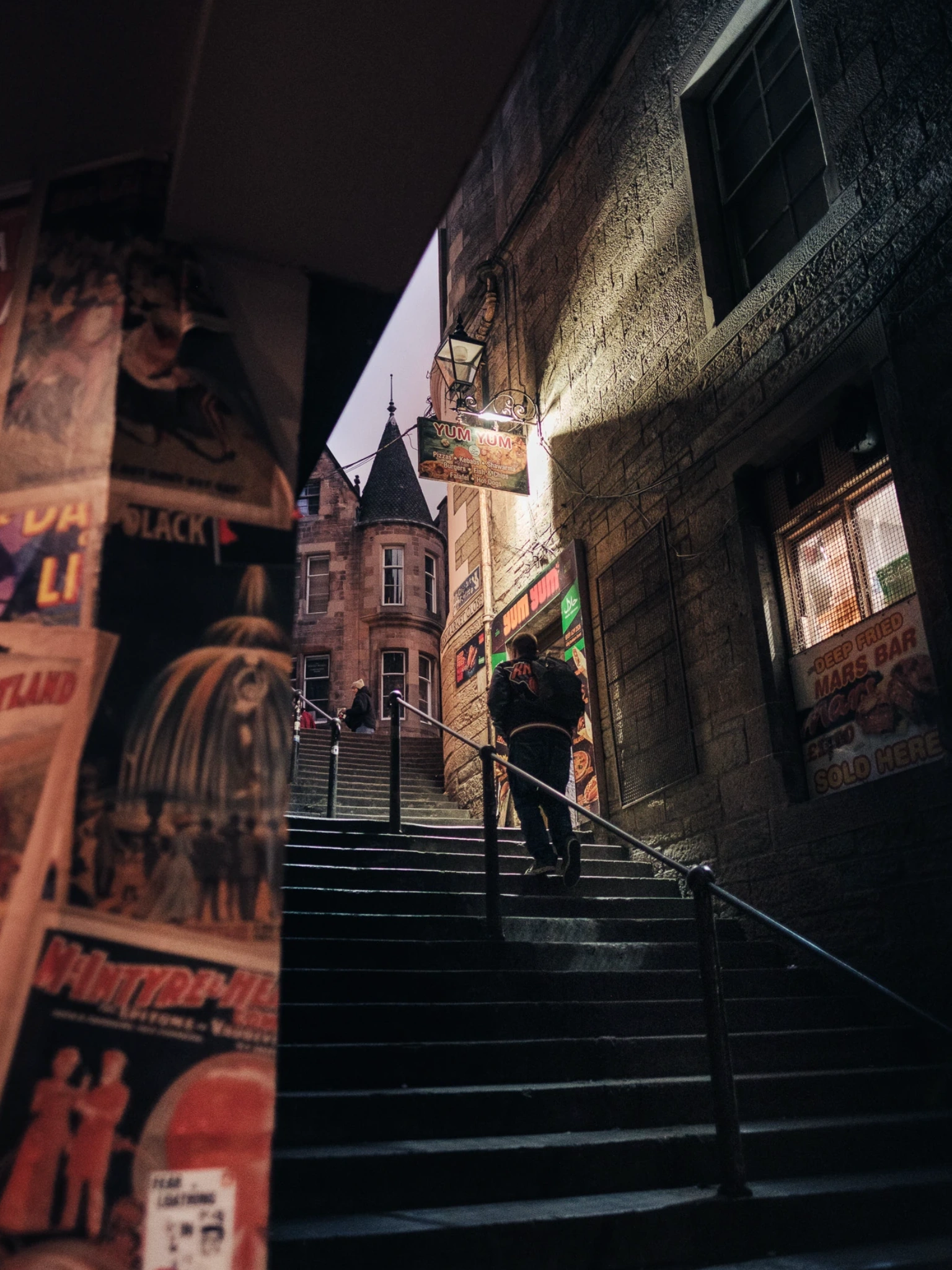
I’m not a pixel-peeper but the images look amazing to me. They are sharp and have a lovely rendering about them. I’ve done no comparison tests with other lenses, but here are some sample images that hopefully show you what you can get out of this lens.


What are the downsides, if any?
I’ve talked about the size and weight already which might be a downside depending on how you feel about lenses. I think it’s fine, personally. It’s on the chunky side but feels good in the hand.
Fujifilm say that this lens doesn’t resolve the 40MP sensor like the new crop of LM lenses do, but since I don’t pixel-peep (or even really know how to tell if things are being resolved or not), I couldn’t tell you what sort of disadvantage there might be here. Another lens that doesn’t allegedly resolve the full 40MP is the classic 35mm F1.4. All I can say is that I’ve had some stunning results from both of these lenses on my X-T5, so personally I don’t think there’s an issue here.
Another downside, in theory, is that this lens doesn’t have the linear motor of its newer siblings, but the auto focus feels pretty fast on my X-T5. The lack of a linear motor might be a problem if you plan to shoot video with this lens, but that’s not something I do. If I’m shooting video, I’d use my Sigma 18-50mm F2.8 zoom.
Conclusion

This is a magnificent lens, especially considering the price you can pick one up on the second-hand market.
24mm won’t be for everyone, especially for street, but it’s close to 28mm and also the same focal length as the main camera on the modern iPhone Pros.
Now that I’m becoming used to the wide focal length I’m inclined to try the latest 18mm F1.4 LM WR. I absolutely don’t need both a 24mm and 28mm, but I’m curious! I’ll probably do a loan just so I can write it up on this blog.
The cost of the 18mm F1.4 right now is exhorbitant, retailing at over £900. If you’ve been considering this, I’d encourage you to take a closer look at the 16mm F1.4 – I’m confident you’d really like it.
If you’d like to try before you commit and you didn’t want to do a Fuji loan, you could try practicing with your iPhone Pro. For some reason, I seem pretty incapable of taking good photos with an iPhone – I think it’s the form factor – but it’s an identical focal length so it would be a good way to get acquainted with it on the streets.
In short, this lens is brilliant. Go and take a look at eBay or MPB and buy one!