Contax S2 review
The film camera I’d been using until recently was a Yashica FX-D, the first ‘proper’ camera I ever owned. It’s fairly basic but it does the job, and it also has a Yashica/Contax mount which means there are some very nice lenses available. I have an original Yashica 50mm f1.4, but a couple of years ago I bought a Contax Zeiss Distagon 35mm f2.8. 35mm is a focal length I much prefer, and these Zeiss lenses are said to be the dog’s proverbials in terms of image quality. They’re not cheap (~£250 in good condition), but they’re an order of magnitude cheaper than a Leica equivalent so, when you put it that way, they’re great value. I might write a blog post about these lenses at some point, but I’m here to write about the Contax S2.
Like many photographers, occasionally I’ll drool over a variety of film cameras that I’d like to try, but all the ones that tempted me required new lenses as well as a new body (or use a lens converter… nope). I didn’t want to switch systems (not unless I’m going full Leica, which I’m not… for now at least!), so I started looking at other Yashica and Contax bodies, and this hunt led me to the Contax S2.
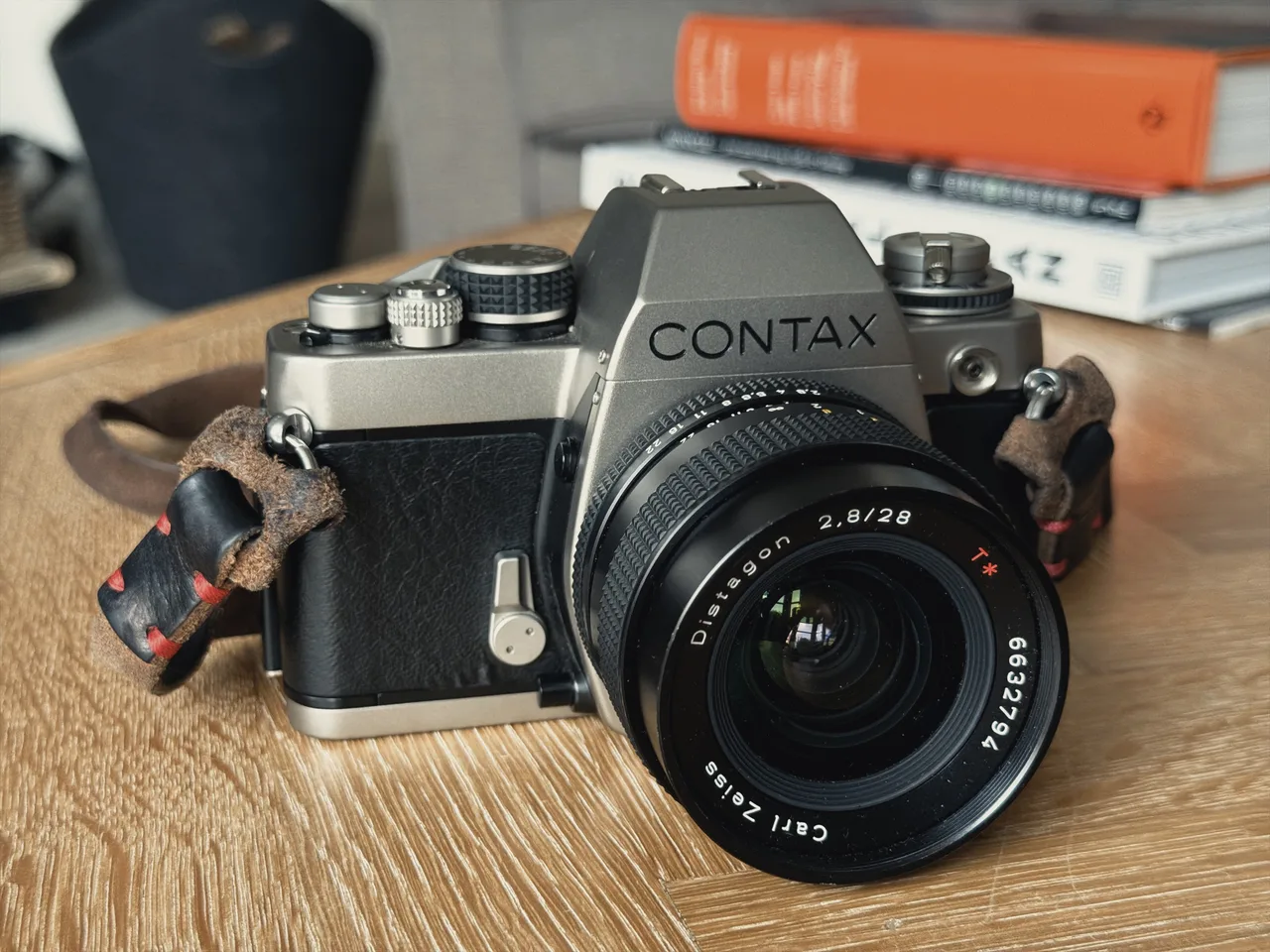
Contax started out in 1932 as Zeiss Ikon’s German rival to Leica. In the 1970s Yashica licensed the name and started making Contax SLRs. In 1983, Kyocera took over Yashica, and took Contax with it. It’s essentially the posh brand sibling of Yashica (like Lexus is to Toyota, or Polestar to Volvo). In 1992, to mark the 60th anniversary of Contax, they introduced the S2 – a fully mechanical SLR made with a sand-blasted titanium body. It’s fairly lightweight, and it’s gorgeous to look at. To my eyes it’s an object of beauty! A complete stunner, SLR perfection. Look at it!
Build quality
The build quality is fantastic. I haven’t tried all the old classic SLRs but I can imagine it’s up there with the best of them. The top and bottom plates are natural titanium (it has a warmth to it), and it has leatherette covering the body.
The S2 feels really solid when you hold it. You can feel the quality, especially compared to the Yashica FX-D. It’s up there with a Leica in my opinion, for a lot less money (I found a mint one on eBay for £200, but typically they go for twice that).
The film advance lever is solid, and the shutter sound is phenomenal. By which I mean phenomenally loud! Some reviews say it’s too loud, but I don’t think that’s true. For sure if you’re trying to sneak a photo of someone in a quiet place you’re going to frighten the bejesus out of them, but maybe don’t try and sneak those photos? I’m a fan of a satisfying shutter thunk. It’s why I love the Leica M, and also why my heart sinks a little each time I take a shot on my leaf-shuttered Fujifilm X100VI. A silent shutter (or, worse, a fake shutter sound) brings me no joy. My X-T5 is a little better (it has a mechanical shutter), but nothing compares to the Contax S2. They don’t make them like this any more!
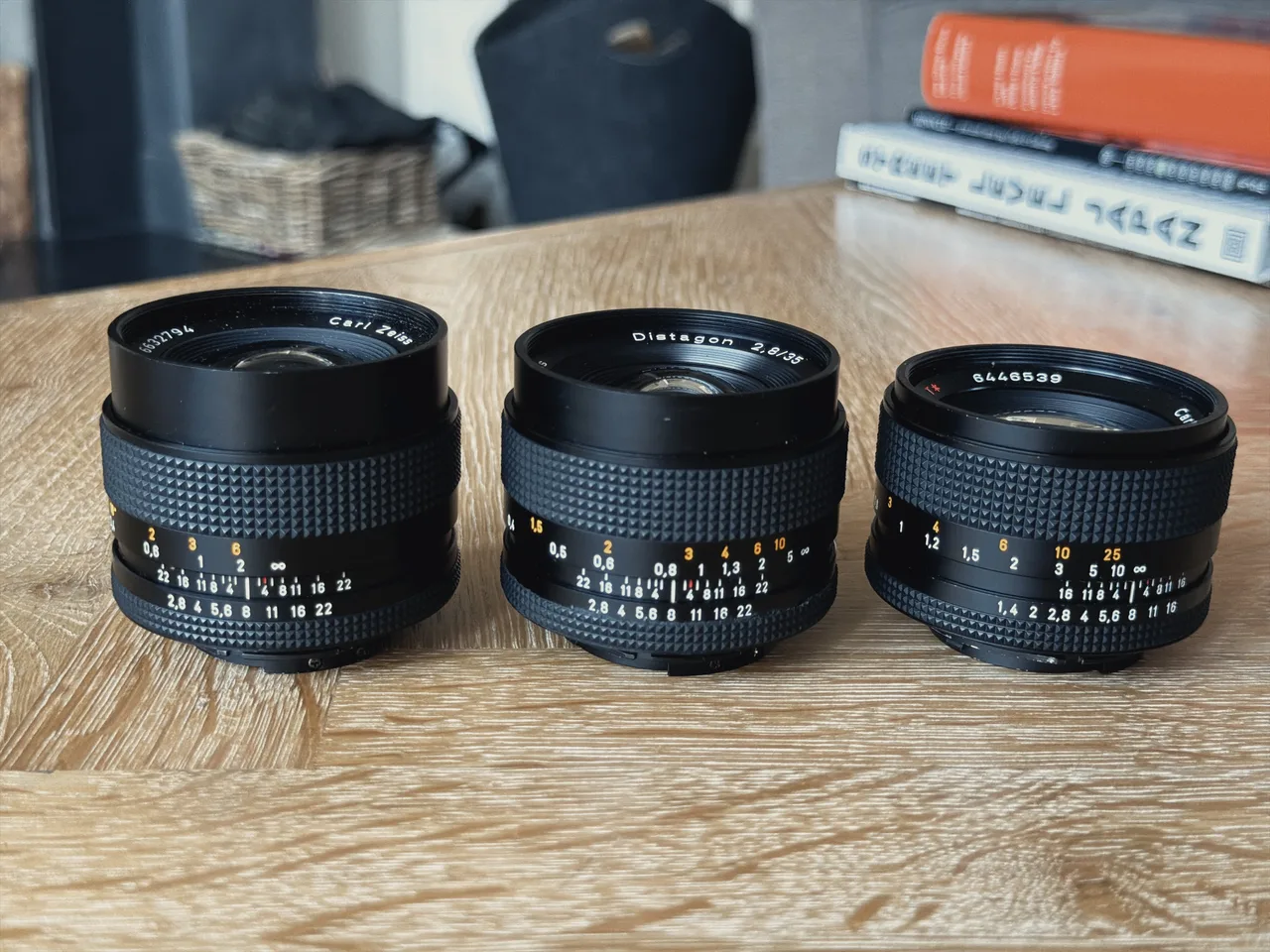
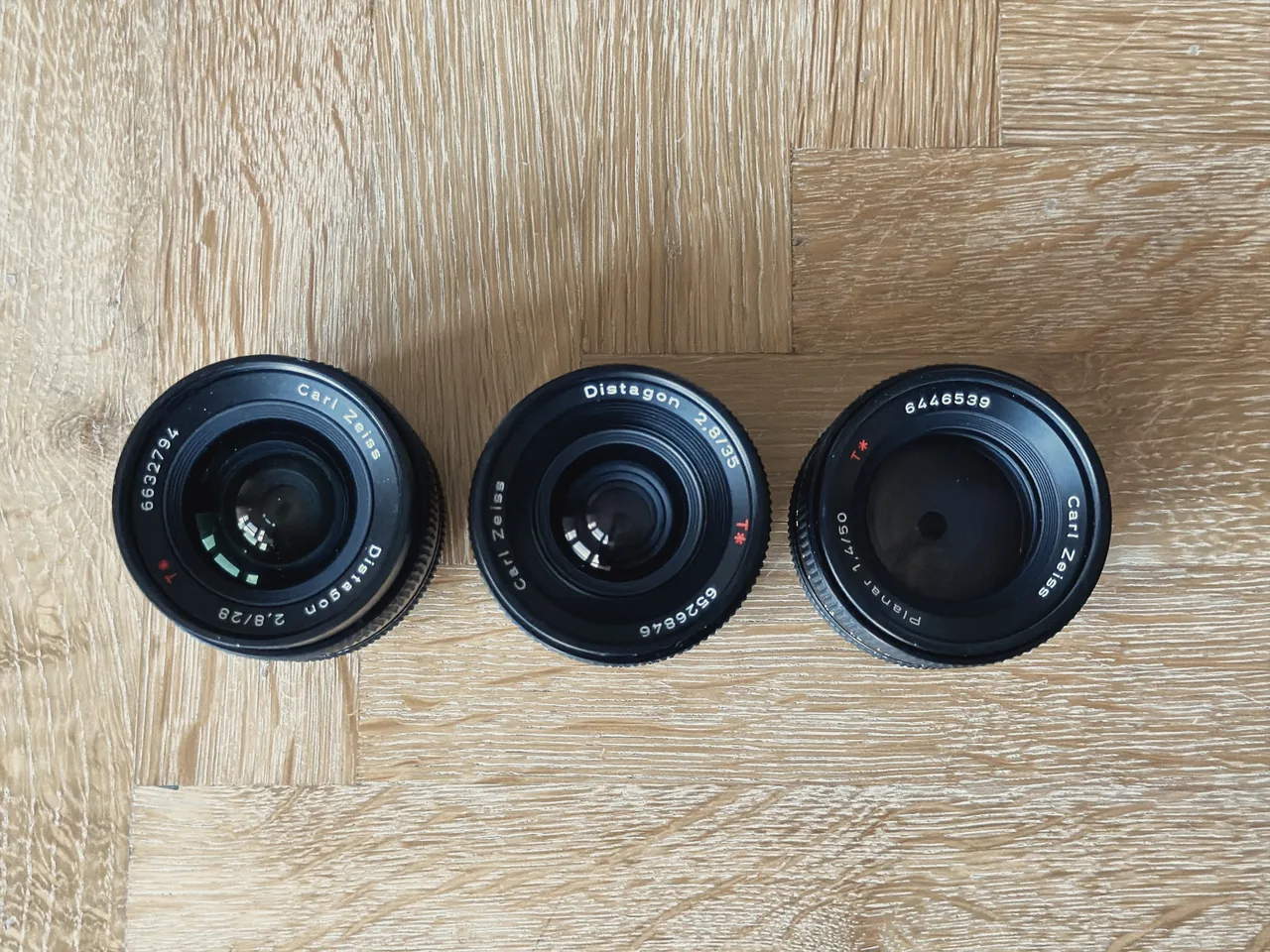
Paired with a Zeiss lens (I’ve since acquired the Distagon 28mm and 35mm and the Planar 50mm f1.4 – the holy trinity), I think it’s literally perfect.
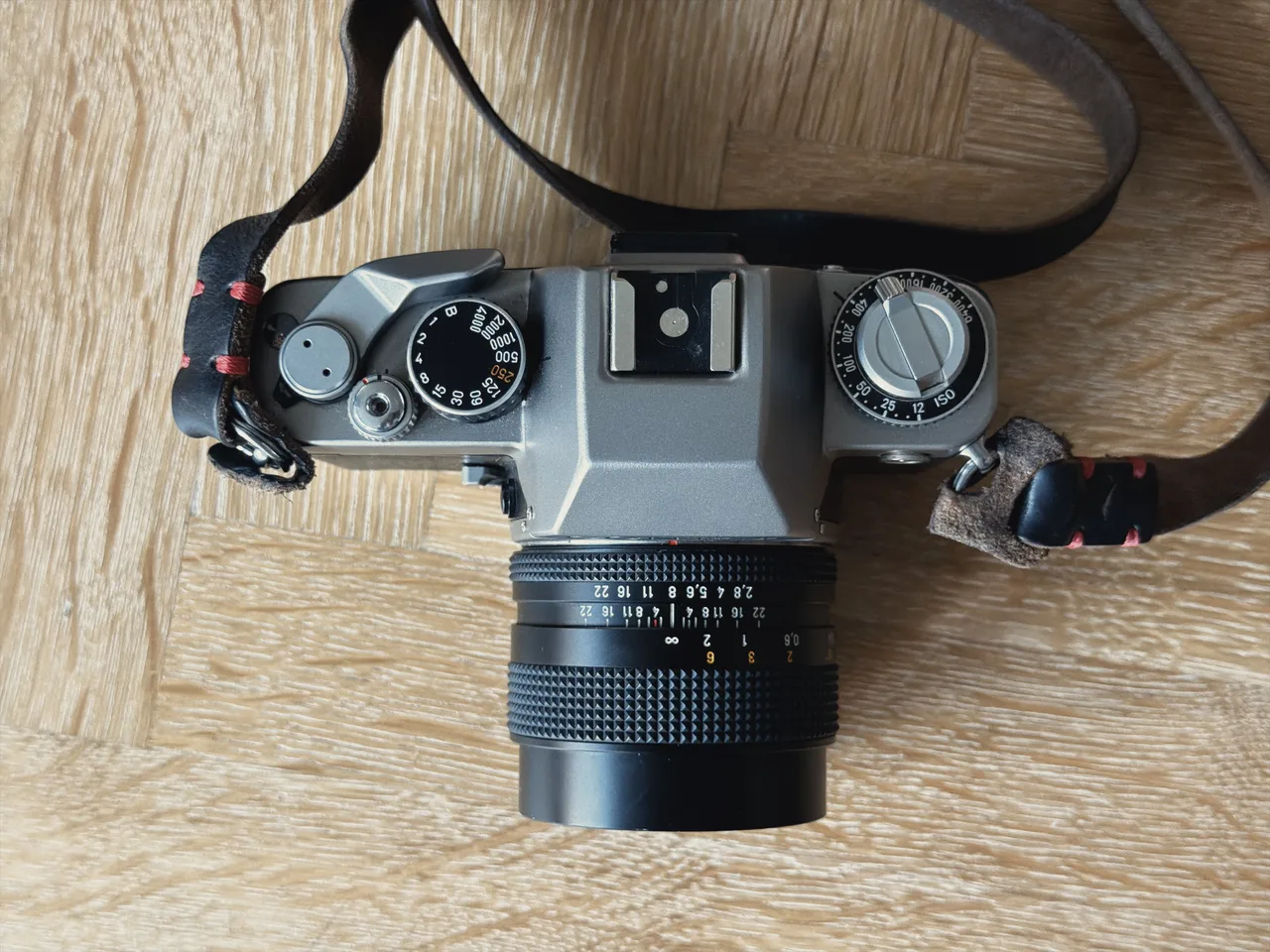
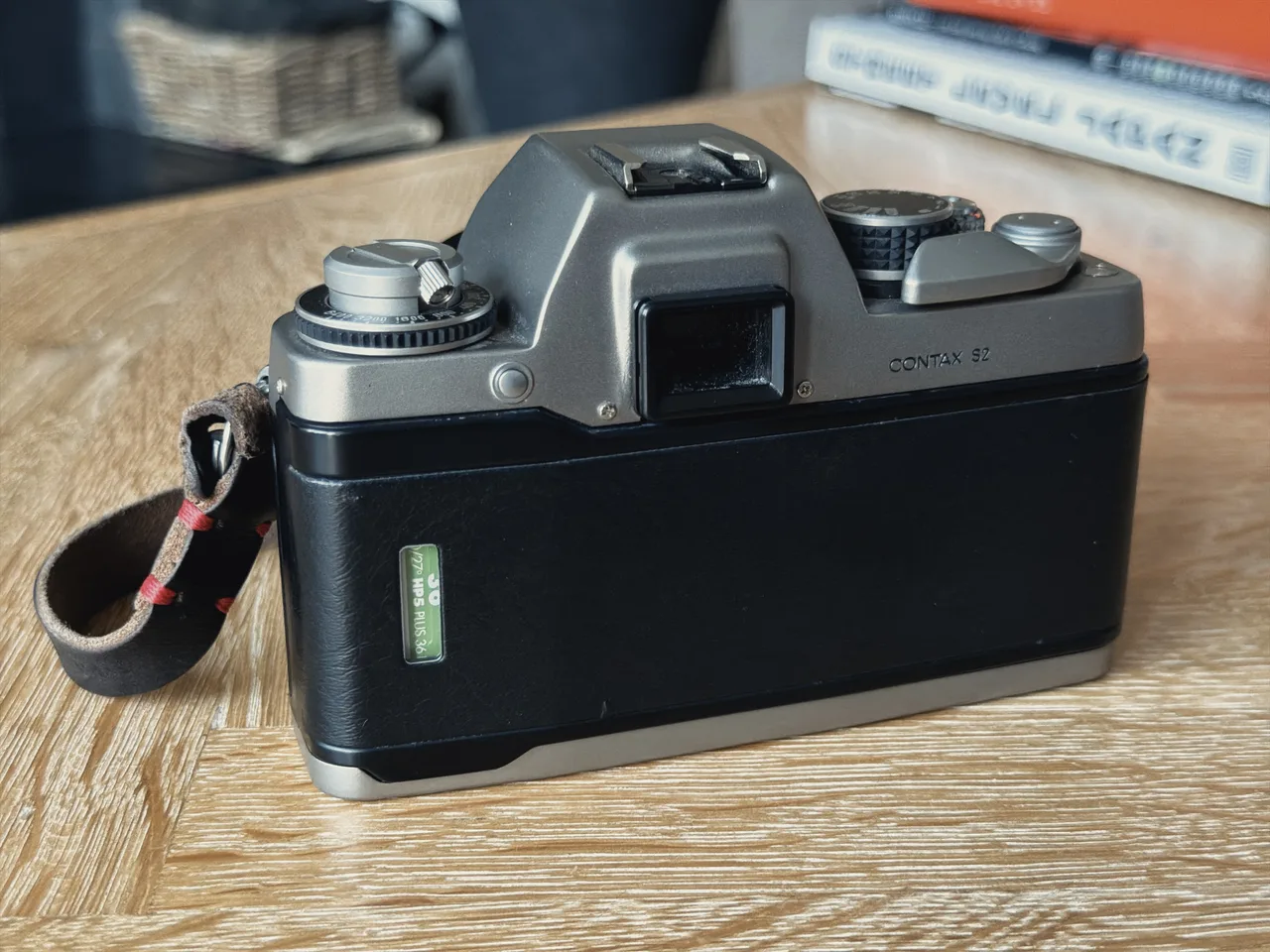
The full specs are:
- Material: Titanium top and bottom plates, leatherette body grip
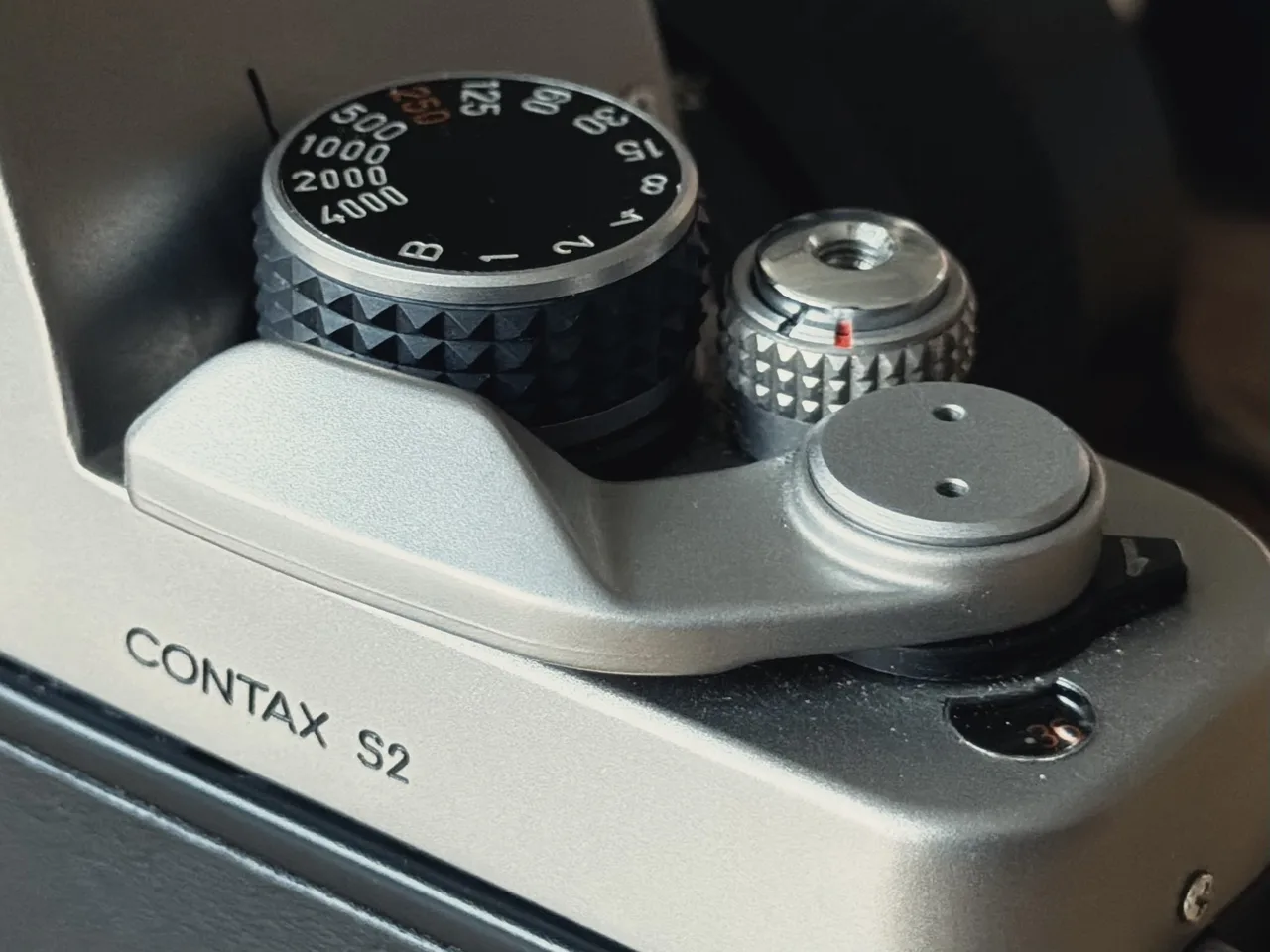
- Shutter: Mechanical, vertical-travel focal-plane shutter, 1s to 1/4000s plus bulb
- Flash sync: 1/250s
- Meter: 5mm spot meter, EV 4 to 20, powered by LR44 batteries. The batteries only power the meter, so the camera works fine without them
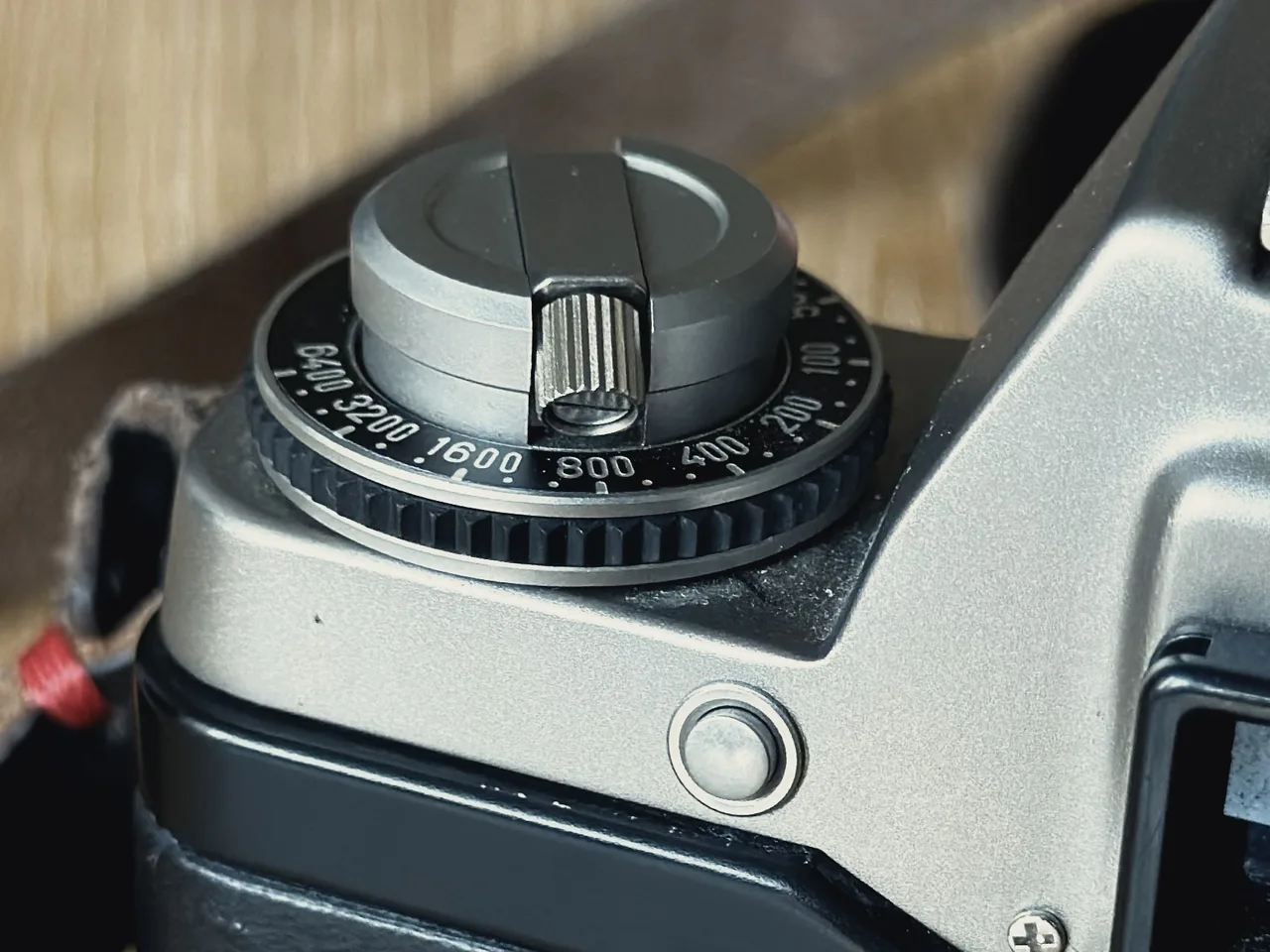
- ISO range: 12 to 6400
- 0.82x magnification viewfinder with 95% coverage
- Weight: 565g (a Leica M6 is 585g for comparison)
- Handy switch for preventing the shutter being accidentally pressed
- Depth-of-field preview button
- Self timer lever
- Double exposure lever
Metering
While doing my research, the metering was the one thing holding me back. The S2 has a spot meter which is sophisticated, but also a complete nightmare. If you’re a savant you’ll be able to spot meter middle grey in your pictures and “do the maths” to figure out the perfect exposure, but for the meatheads among us, this is quite hard and probably beyond us.
I do like a challenge though, so with a combination of LightMe on my iPhone and the sunny 16 rule, I’ve found you can actually get by without really having to think too hard about it. The point of a mechanical camera is to really do it all yourself, right? It’s something that can become much more intuitive with time, and I’ve found that I’m getting pretty good at just looking at the light around me and guesstimating the exposure I need for a given f-stop (at least with 400 ISO film!).
The meter readout in the viewfinder is a column of shutter speeds down the right-hand side, lit by LEDs. The speed you’ve set on the dial flashes, while the speed the meter recommends stays solid. It would be more intuitive the other way round to be honest, but you get used to it.
I’ve since invested in a fancy Sekonic Flashmate L-308X, but to be honest for your average street shots this is overkill. LightMe will be just fine. For portraits though, the Sekonic is the business.
It’s worth noting that Contax released a successor, the S2b, in 1994 which had centre-weighted metering to please us mere mortals. This is arguably the better model to get, but to be honest it doesn’t look nearly as good with its boring dark grey finish (not natural titanium), plus it’s at least 2-3x the price of the S2.
Shooting experience
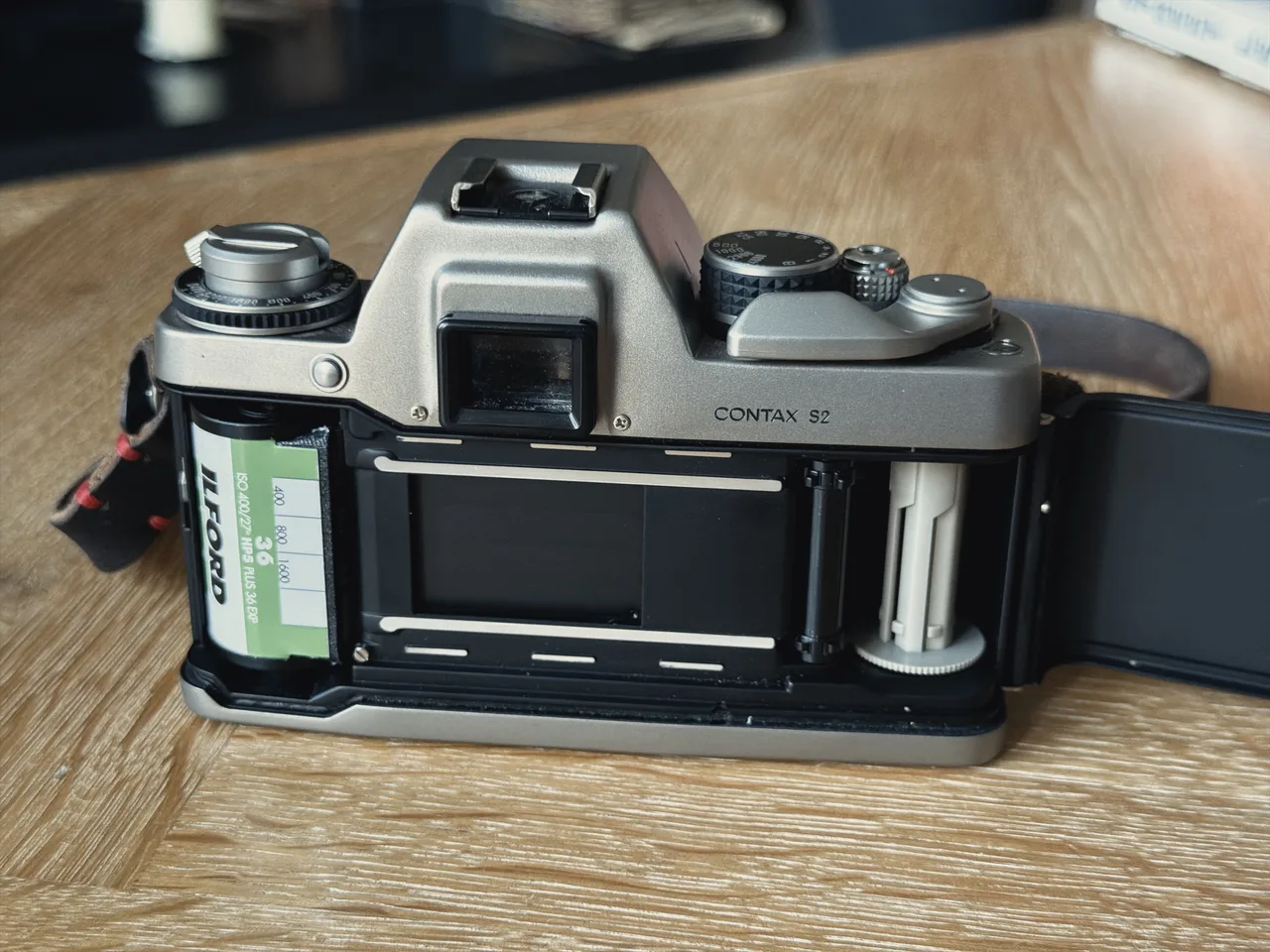
If you’ve used a film SLR, you kinda know what you’re getting. The S2 uses a split-image focusing screen, which I quite like because it’s the same as the Yashica FX-D and I’m used to it. I’m not sure if it’s easier or harder to use than other types of focus aid, but I find it comparable to using a rangefinder (maybe a bit easier?).
The viewfinder is really large as well, more so than the FX-D, so it’s a really immersive experience to look through.
The ISO dial is fairly standard, as is the rewind crank. The shutter speed dial is solid and satisfying to use. You’re not going to accidentally knock it. And the metal film advance lever is very satisfying too. There’s a switch next to the shutter button that you can turn to lock the shutter and prevent it from being accidentally pressed, which is handy.
Lenses
A quick note about the lenses I use which I mentioned above. These are the Zeiss Distagon 28mm and 35mm f2.8 and the Planar 50mm f1.4. They’re amazing and I love them. The focusing is smooth, the aperture ring has a nice click to it, and the zone focusing is perfect. Who needs Leica?
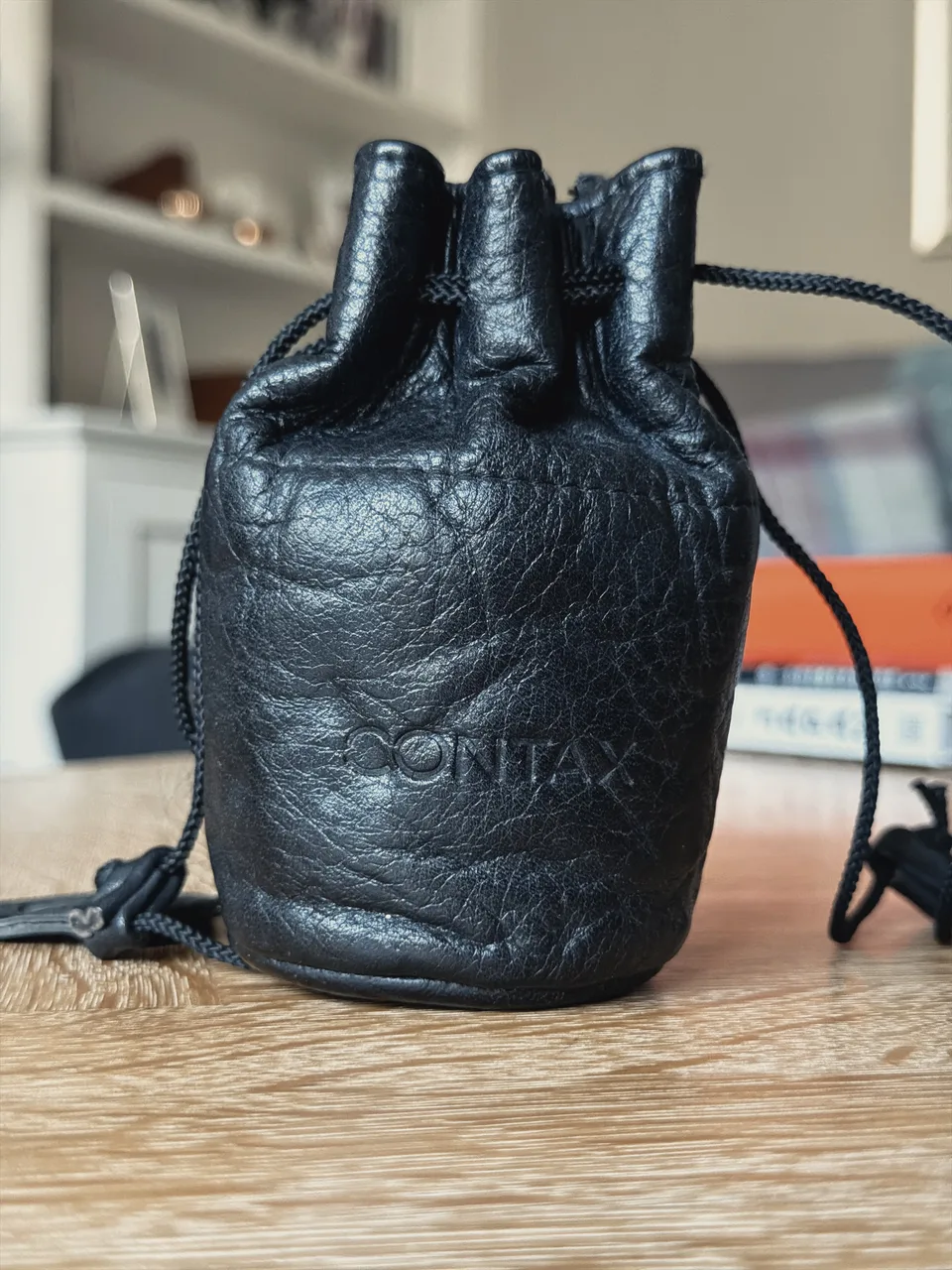
Also, if you hunt around eBay you can get these original leather Contax lens cases which look fantastic. I’ve bought three of these to store my lenses.
Conclusion
At the end of the day, a film camera is only really as good as the lens stuck on it and the film inside it. Put the same lens and film in my Yashica FX-D and it’ll take the same picture as the S2! There are some additional benefits with the S2, such as the 1/4000s max shutter speed and the 1/250s flash sync, but the primary reason for getting it over the FX-D (for me, at least) is the build quality, and the way it feels.
Other than the spot metering, there are no real downsides, if the spot metering is actually a downside. Despite my initial reservations, the more I use it, the more I get used to it. I still don’t quite trust myself to rely on it entirely, so I’m sticking with a light meter which is fine by me. The other thing to know is that it’s manual exposure only: there’s no aperture priority or any other auto mode, so you’re setting everything yourself.
The Contax S2 is a wonderful camera that oozes quality and style, and there’s a cracking range of lenses available. I’d recommend it to anyone interested in getting a film SLR.
Sample photos
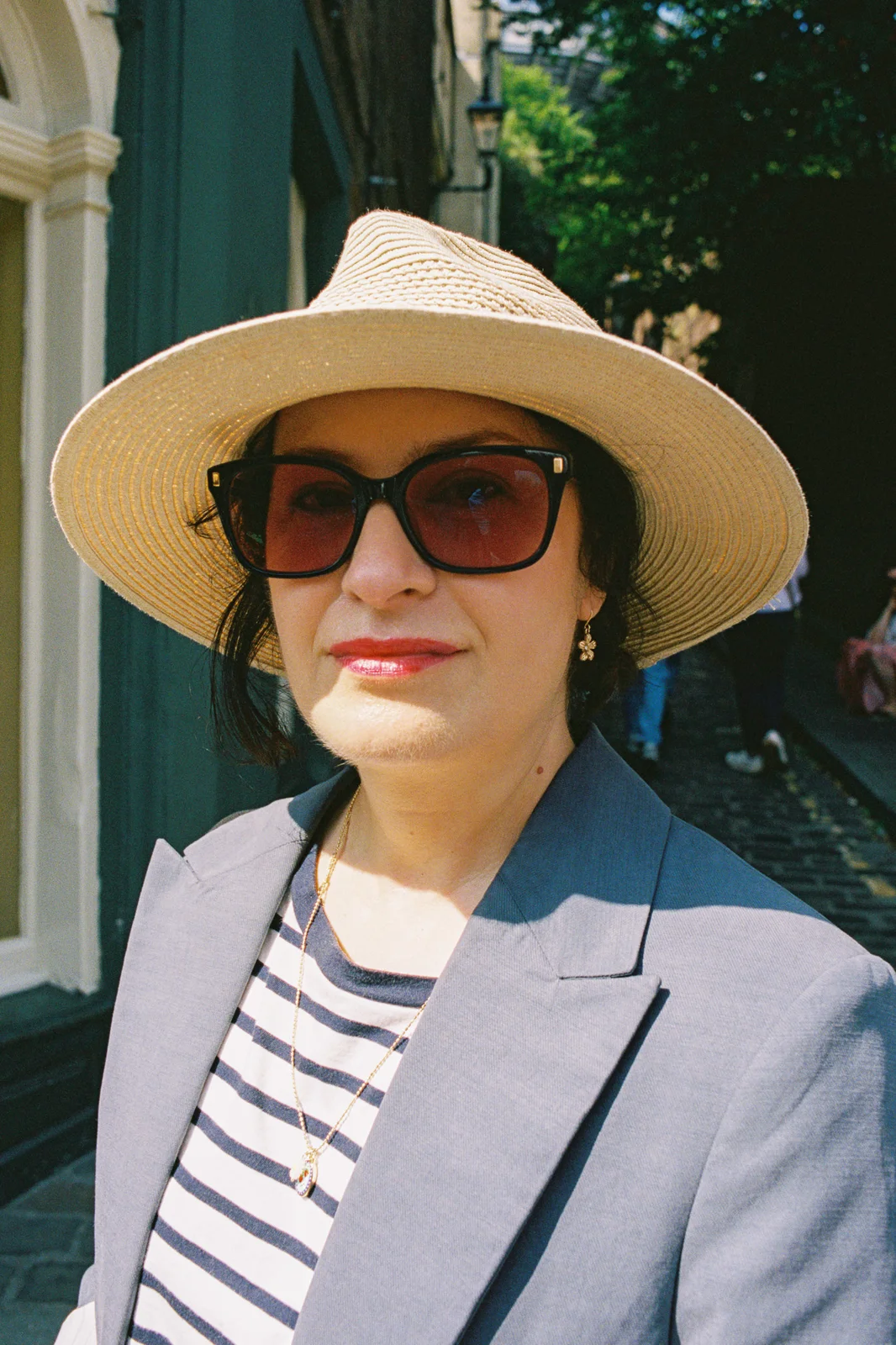
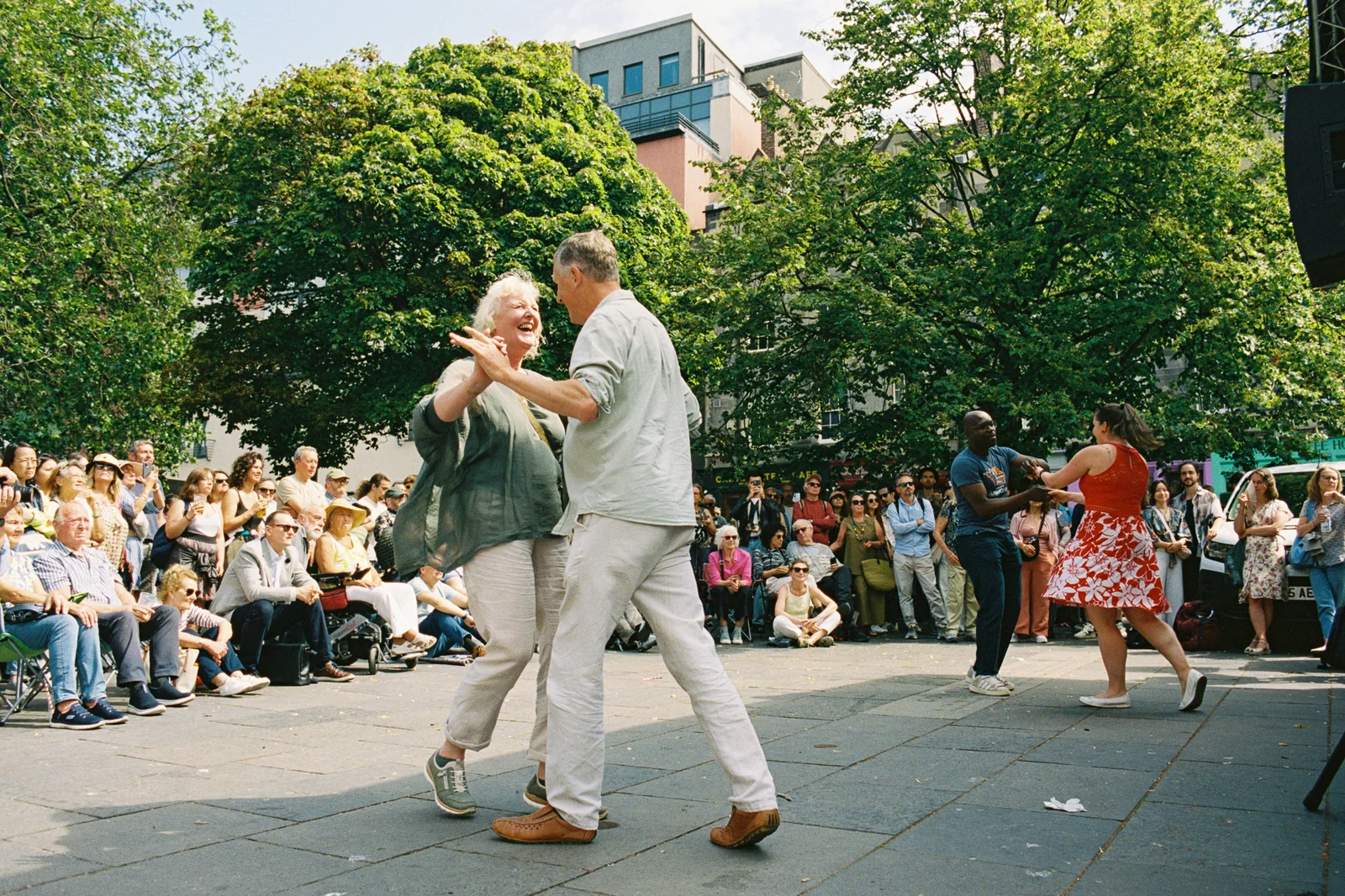
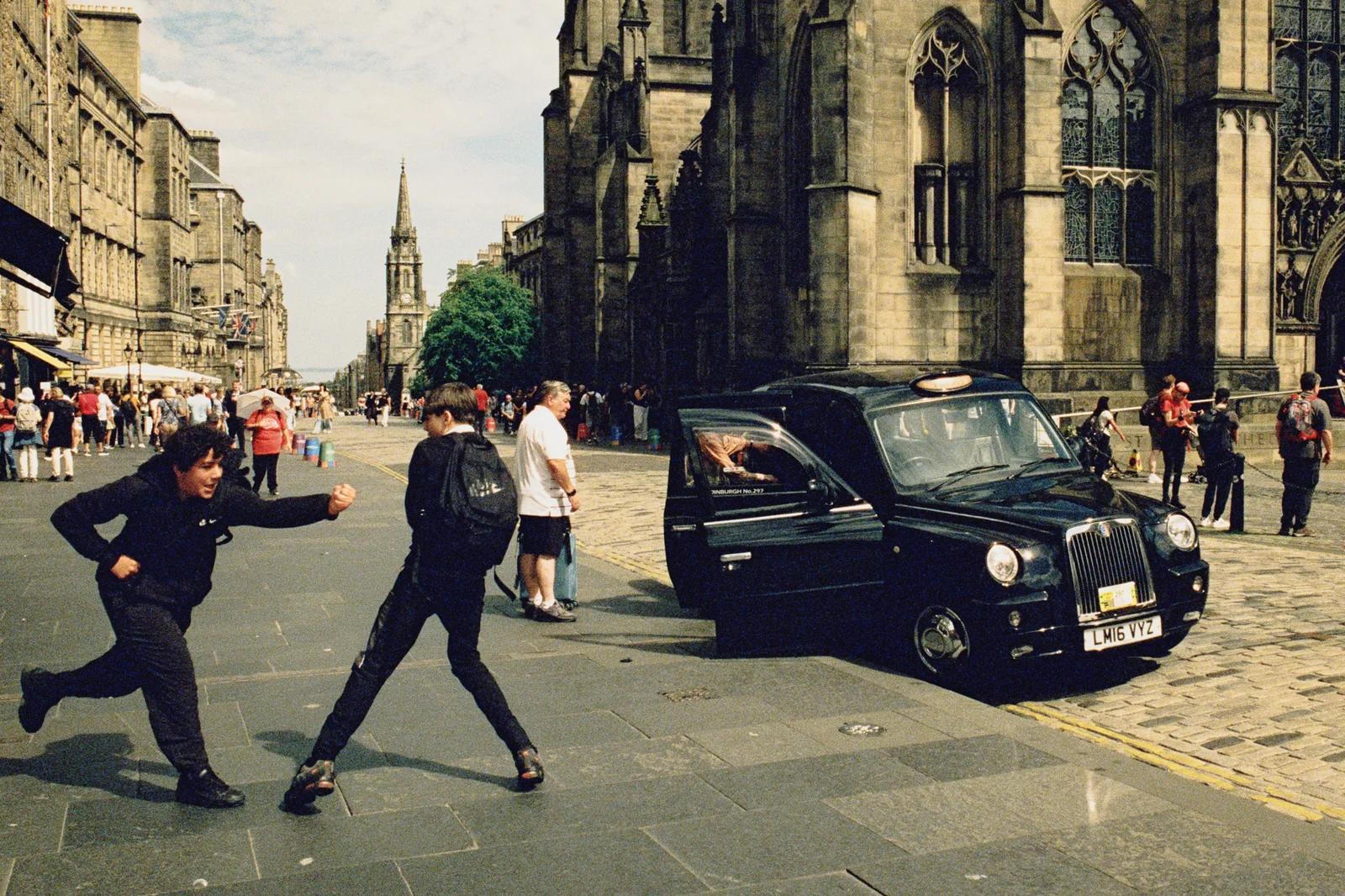
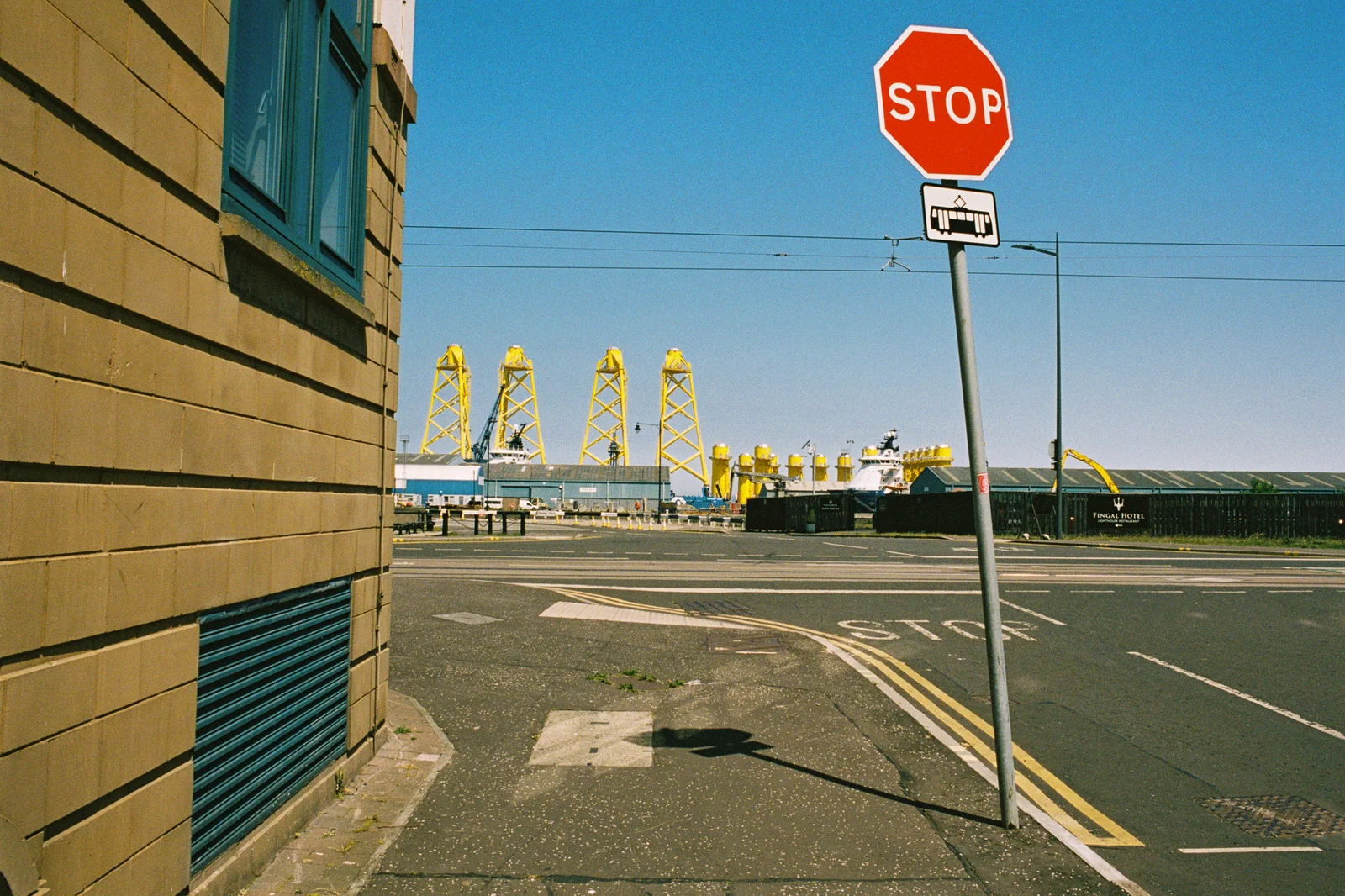
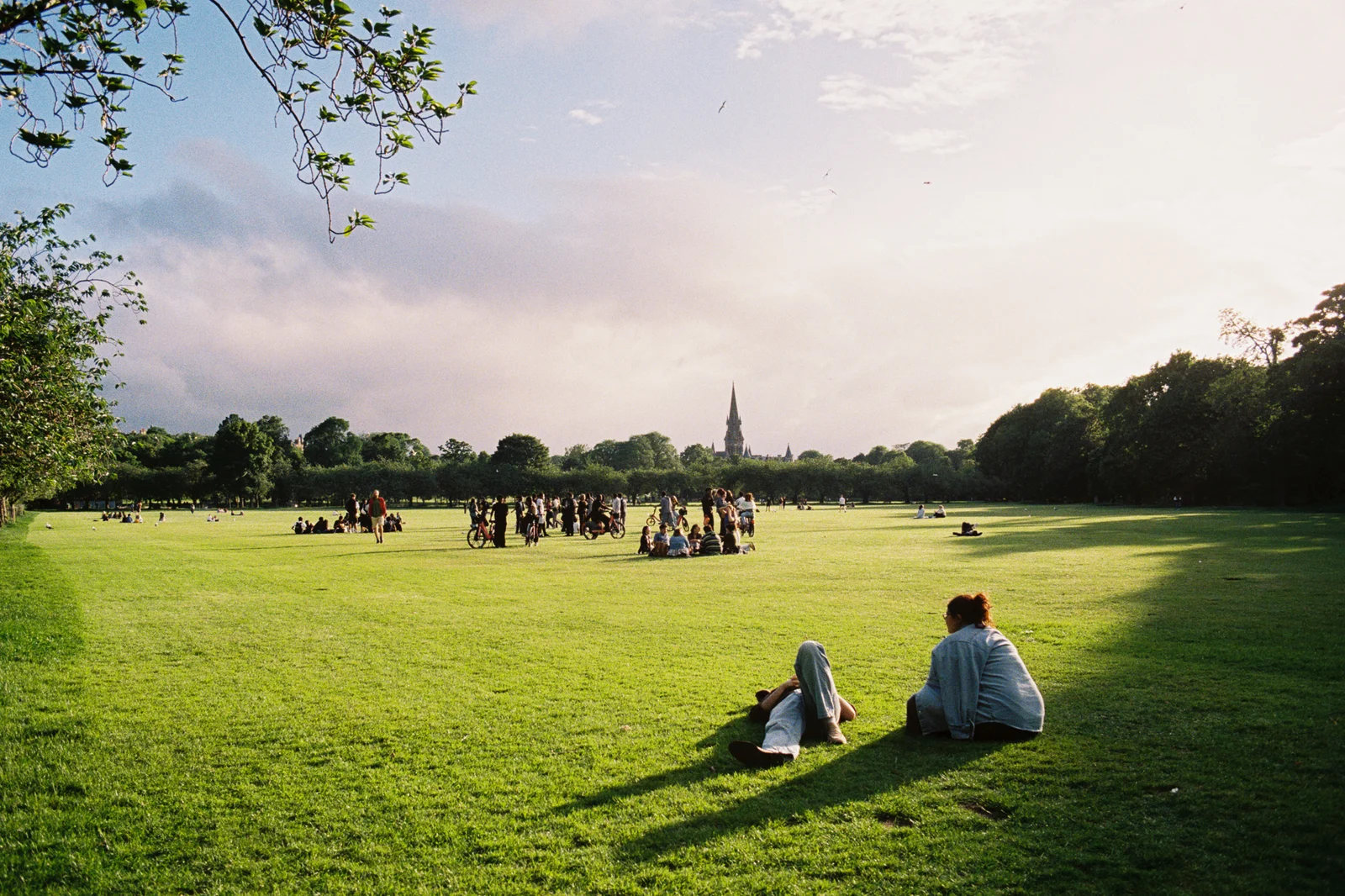
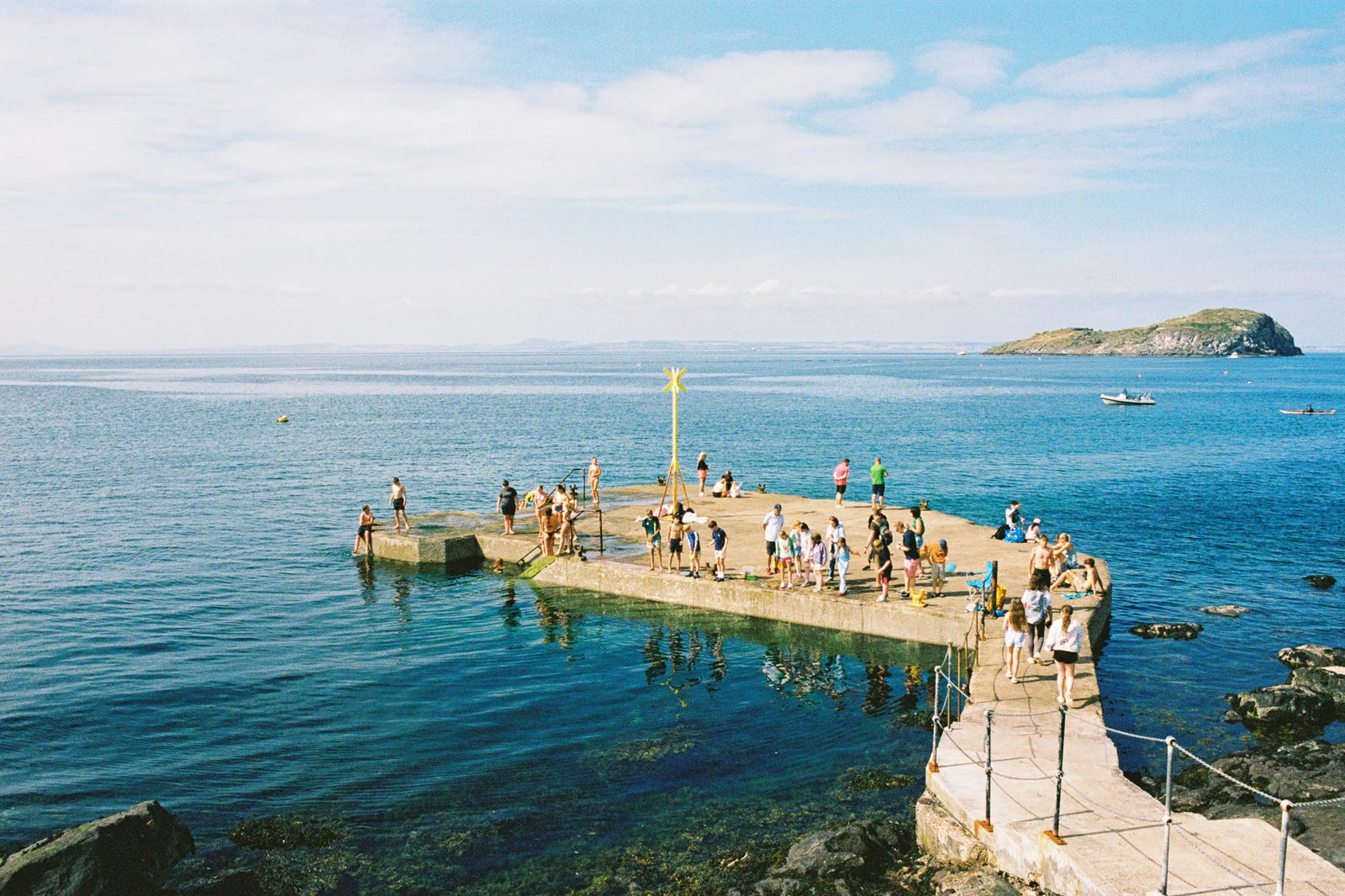
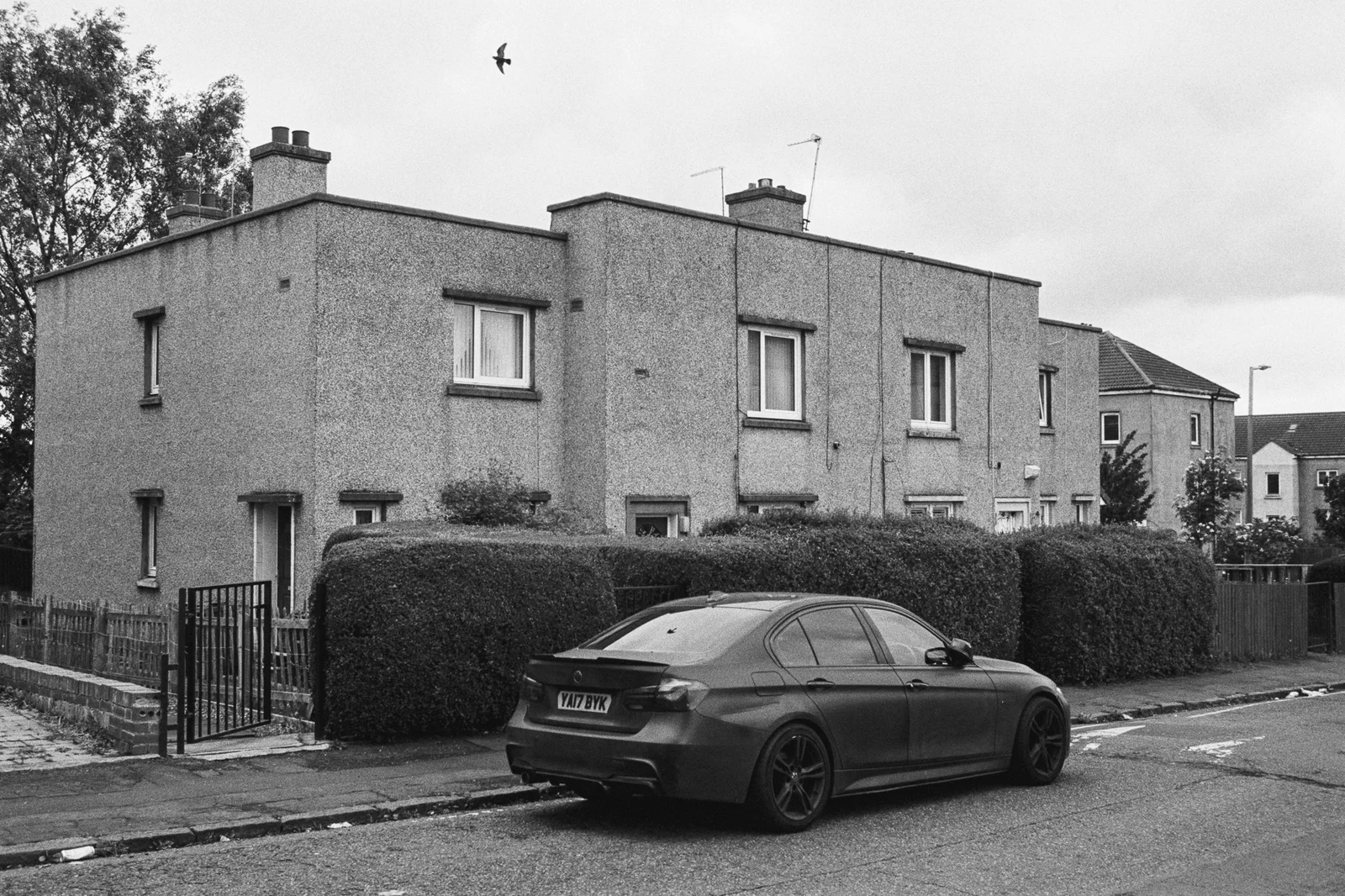
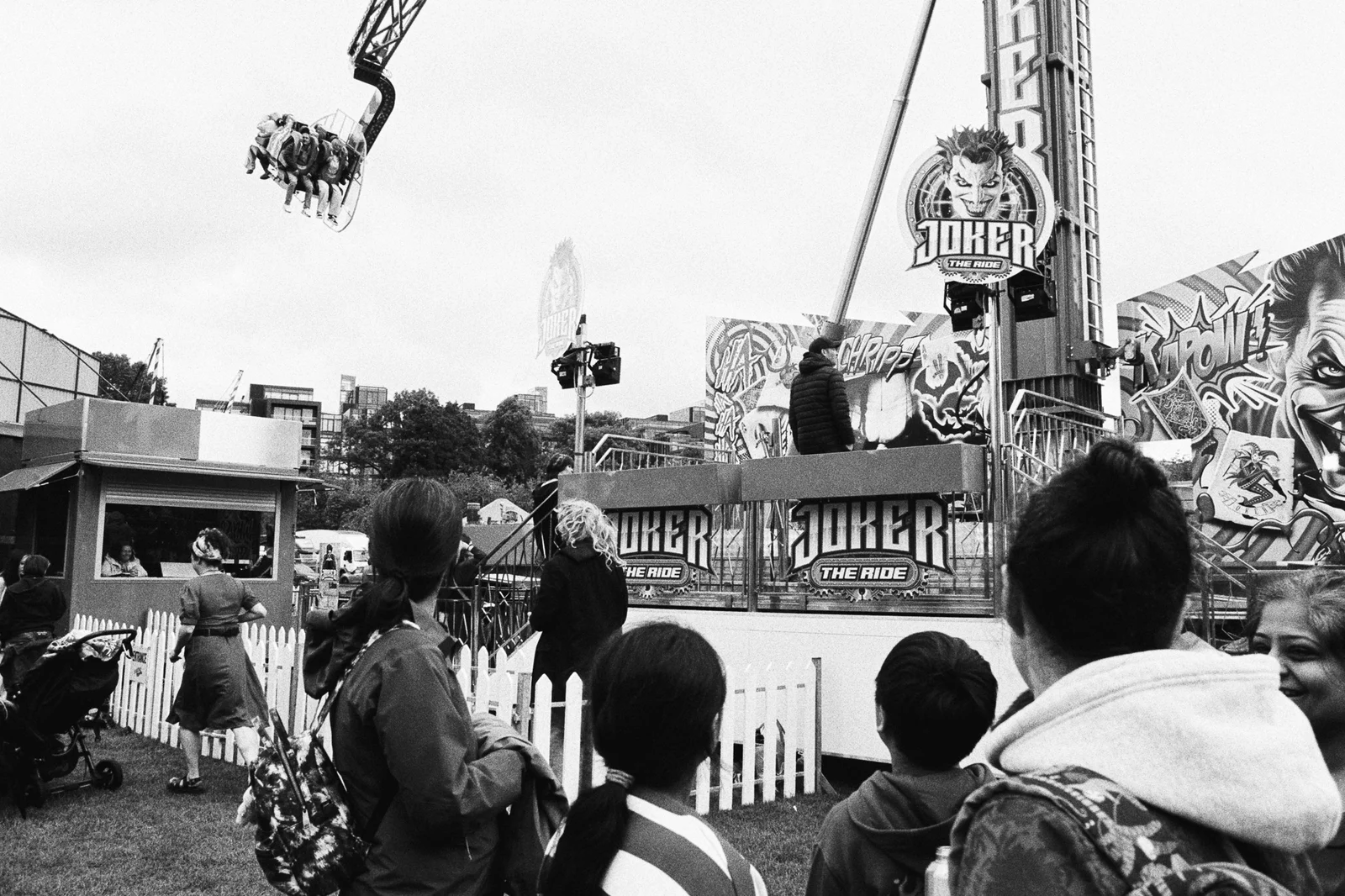
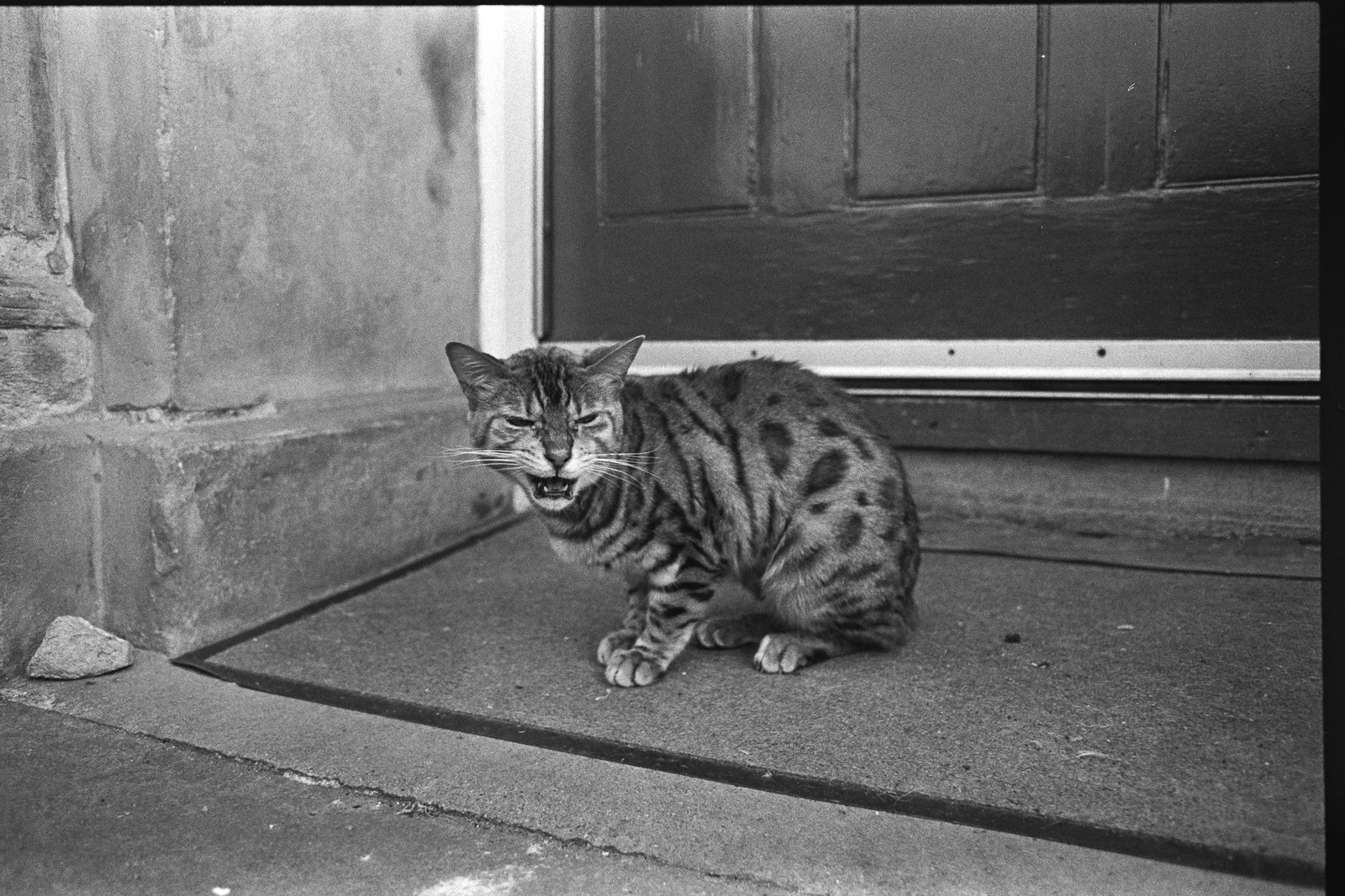
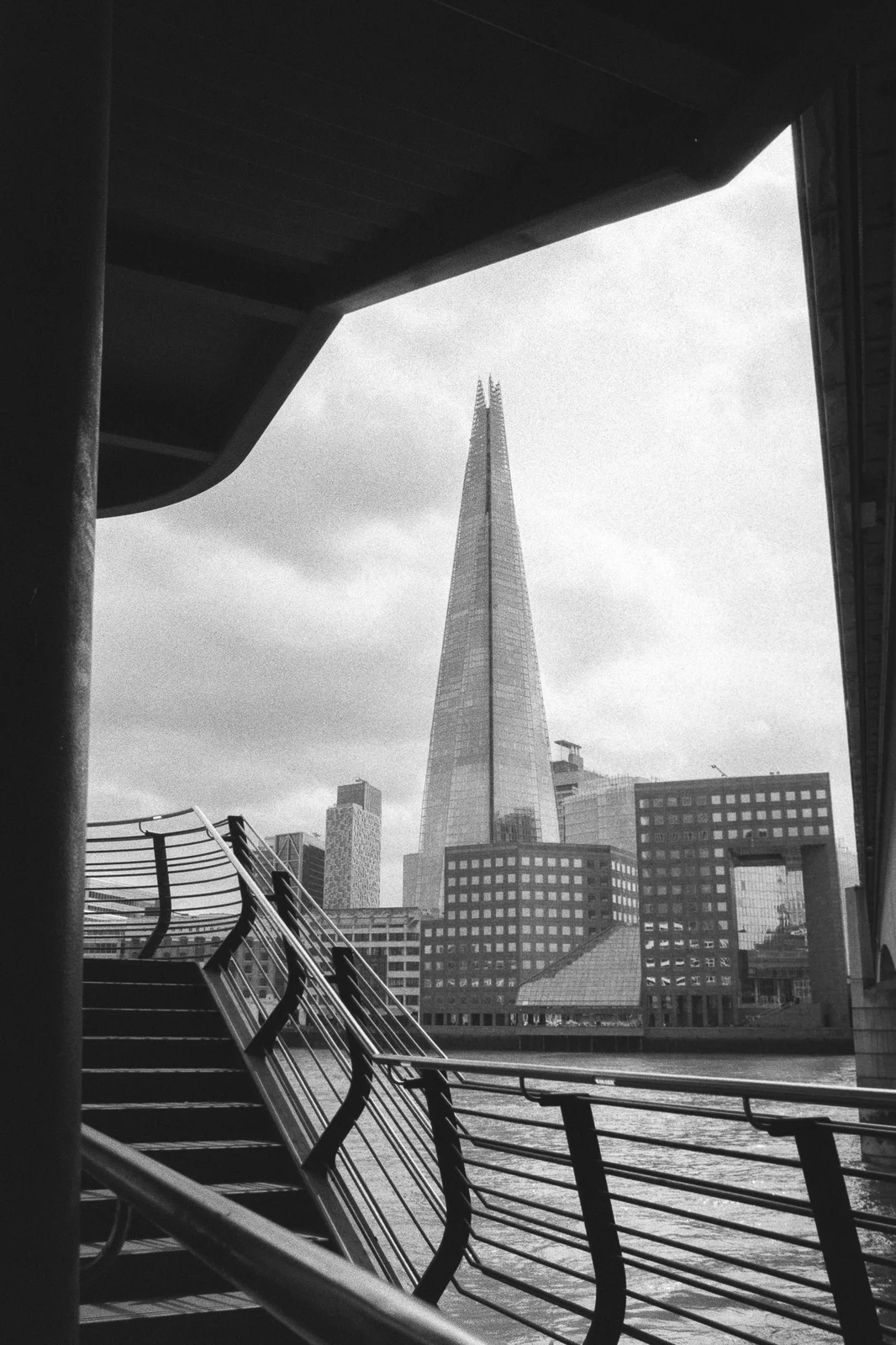
Here are some photos I’ve taken over the past few months, along with the film stocks used for the nerds. Let me know what you think!